Have you ever wondered which organization wielded the most influence in the labor movement of the 19th century? Understanding this pivotal period reveals how labor organizations shaped workers’ rights and paved the way for modern labor laws.
This article will explore the origins of labor organizations, highlighting key figures and major unions that significantly impacted society. By grasping these historical contexts, readers will appreciate the ongoing struggles for workers’ rights and the evolution of labor movements.
We will delve into the major labor unions of the time, their founding principles, and the contributions of influential leaders who fought for workers’ rights and social justice.
The origins of labor organizations in the 19th century
The roots of labor organizations in the 19th century can be traced back to the Industrial Revolution, which began in the late 18th century. This era marked a significant transformation in production methods, leading to the establishment of factories and urbanization. Workers faced long hours, low wages, and unsafe working conditions, igniting the need for collective action.
One of the earliest forms of organization was the trade union, which emerged in response to the exploitation of workers. By the 1820s, several trade unions had formed across Europe and the United States, advocating for better conditions. The Mechanics’ Union of Trade Associations, established in 1827 in the U.S., is an example of such early efforts, uniting skilled craftsmen to negotiate better terms collectively.
- Formation of the National Labor Union (NLU) in 1866: This was one of the first national labor federations, aimed at unifying various labor groups.
- Knights of Labor: Founded in 1869, this organization sought to include all workers, regardless of skill level, and pushed for an eight-hour workday.
- American Federation of Labor (AFL): Established in 1886, it focused on skilled workers and became a significant force in advocating labor rights.
Labor organizations faced intense opposition from employers and government authorities. For instance, the 1886 Haymarket Affair in Chicago, where a peaceful rally turned violent, highlighted the struggle between labor activists and law enforcement. This incident underscored the challenges faced by labor movements, yet it also galvanized public support for labor rights.
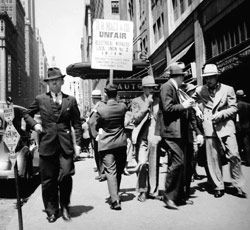
Throughout the 19th century, the rise of labor organizations was characterized by a series of strikes and protests. The Great Railroad Strike of 1877, for example, saw workers protesting wage cuts, resulting in widespread unrest across several states. This event demonstrated the growing power of organized labor and the willingness of workers to fight for their rights.
Key figures in early labor movements
The early labor movements of the 19th century were shaped by several influential figures who played critical roles in advocating for workers’ rights. Their efforts laid the groundwork for the labor organizations that emerged during this period.
- Samuel Gompers: As the founder of the American Federation of Labor (AFL) in 1886, Gompers was pivotal in organizing skilled laborers. He emphasized collective bargaining and sought to improve working conditions, wages, and hours for workers.
- Mary Harris Jones: Known as “Mother Jones,” she was a prominent labor activist who fought for miners’ rights and played a significant role in organizing labor strikes. Her activism helped raise awareness about the harsh conditions that workers faced, especially children.
- Eugene V. Debs: A founding member of the Industrial Workers of the World (IWW) and five-time presidential candidate for the Socialist Party, Debs advocated for workers’ rights and socialism. His leadership during the Pullman Strike of 1894 highlighted the struggles of railway workers nationwide.
In addition to these key figures, numerous labor leaders emerged across various industries, each contributing unique perspectives and strategies. The following are some notable examples:
- John L. Lewis: As the president of the United Mine Workers of America, Lewis was instrumental in organizing coal miners and advocating for better labor conditions. His leadership during the 1930s helped solidify the importance of unions in American society.
- Frances Perkins: The first woman to serve in a U.S. Cabinet, Perkins was a labor activist who became Secretary of Labor in 1933. She was a strong advocate for workers’ rights and played a significant role in establishing labor regulations.
These individuals not only fought for the rights of workers but also inspired future generations to continue the struggle for fair labor practices. Their collective efforts were crucial in establishing a foundation for the labor movement, which would continue to evolve throughout the 20th century.
Major labor unions and their impact
The 19th century witnessed the emergence of several major labor unions that significantly shaped the landscape of workers’ rights. Among these, the Knights of Labor and the American Federation of Labor (AFL) played pivotal roles in advocating for labor reforms and improving working conditions.
The Knights of Labor, founded in 1869, aimed to unite all workers, regardless of skill level or occupation. By the mid-1880s, the organization boasted over 700,000 members. They pushed for an eight-hour workday, the abolition of child labor, and equal pay for equal work. Their efforts culminated in the Haymarket Affair of 1886, which, despite being a setback, highlighted the growing labor movement’s visibility.
- Knights of Labor: Founded in 1869, focused on inclusivity and broad reforms.
- American Federation of Labor (AFL): Established in 1886, prioritized skilled workers and specific trade rights.
- International Workers of the World (IWW): Founded in 1905, sought to unite all workers under a single banner.
The AFL, created by Samuel Gompers, took a different approach by focusing on the needs of skilled laborers. This union concentrated on securing better wages, hours, and working conditions for its members. By 1904, the AFL had grown to approximately 1.6 million members, largely due to its pragmatic approach to labor negotiations.
In contrast, the IWW adopted a more radical stance. Founded in 1905, the IWW aimed to unite all workers and promote direct action, such as strikes and boycotts. Their motto, “An injury to one is an injury to all,” emphasized solidarity among workers across various industries. Although the IWW faced significant opposition, it inspired future generations of labor activists.
| Union | Year Founded | Membership (Approx.) | Key Focus |
|---|---|---|---|
| Knights of Labor | 1869 | 700,000+ | Inclusive reforms |
| AFL | 1886 | 1.6 million | Skilled workers’ rights |
| IWW | 1905 | Notable but fluctuating | Direct action and solidarity |
These major labor unions not only advocated for workers’ rights but also laid the groundwork for future labor movements. Their legacy continues to influence labor advocacy and reforms in the modern era.
Challenges faced by labor organizations
The labor organizations of the 19th century faced numerous challenges that hindered their growth and effectiveness. One of the primary obstacles was opposition from employers, who often viewed unions as threats to their authority and profit margins. Employers employed various tactics, including hiring strikebreakers and using legal measures to suppress union activities.
Legal restrictions also played a significant role in limiting the effectiveness of labor organizations. Many countries had laws that prohibited workers from organizing or striking. For instance, in the United States, the Commonwealth v. Hunt case in 1842 established the legality of labor unions, yet many states continued to impose restrictions on their activities.
- Violence and Intimidation: Labor strikes often turned violent, leading to clashes between workers and law enforcement. The Haymarket Affair in Chicago in 1886 is a notable example, highlighting the extreme measures taken to suppress labor movements.
- Economic Pressures: The economic climate of the 19th century, including frequent recessions, made it difficult for workers to sustain strikes and push for better conditions.
- Internal Conflicts: Various factions within labor organizations sometimes led to fragmentation, making it challenging to present a united front. Disagreements over goals and strategies often weakened their collective power.
Despite these challenges, labor organizations made significant strides in advocating for workers’ rights. For example, the formation of the American Federation of Labor (AFL) in 1886 marked a turning point. This organization united several trade unions, focusing on achieving concrete gains rather than broad political reforms.
Moreover, public perception of labor unions was often negative, fueled by media portrayals that depicted workers as violent or ungrateful. This stigma made it difficult for labor organizations to gain widespread support. However, as more workers began to recognize the benefits of union membership, such as better wages and working conditions, public opinion gradually shifted.
Labor organizations faced numerous hurdles in the 19th century, including legal, economic, and social challenges. Nevertheless, their resilience and determination ultimately laid the groundwork for future advancements in workers’ rights.
The role of strikes and protests
Strikes and protests were pivotal in the labor movements of the 19th century, serving as powerful tools for workers to voice their demands. These collective actions often arose in response to poor working conditions, low wages, and long hours. For instance, the Great Railroad Strike of 1877 marked a significant turning point, as it was one of the first nationwide strikes in the United States.
During this strike, approximately 100,000 workers participated, leading to widespread disruptions across multiple states. The strike highlighted the growing tensions between labor and management, as well as the willingness of workers to stand together for their rights.
- Key strikes and their impacts:
- The Haymarket Affair (1886): A peaceful protest for an eight-hour workday turned violent, resulting in the deaths of several police officers and civilians.
- The Pullman Strike (1894): This nationwide railroad strike led to a major disruption in rail traffic and a federal intervention, showcasing the government’s stance against labor movements.
- The Lawrence Textile Strike (1912): Known as the “Bread and Roses” strike, it emphasized not just fair wages but also better working conditions and dignity for workers.
Protests were also essential for raising public awareness and garnering support for labor issues. For example, in 1886, the American Federation of Labor (AFL) organized a massive rally in Chicago, drawing thousands who supported the fight for workers’ rights. This event underscored the importance of solidarity among different labor groups.
Statistics reveal that strikes were often effective; research indicates that over 60% of strikes led to some form of concession from employers. This reflects the growing power of organized labor and the recognition of workers’ rights within the political and economic landscape of the time. These actions not only advanced workers’ rights but also contributed to the establishment of labor laws that improved conditions for future generations.
Legislation affecting labor unions
The landscape of labor unions in the 19th century was deeply influenced by various legislative measures. Laws enacted during this period either facilitated or restricted the growth of these organizations, impacting their ability to advocate for workers’ rights.
One significant piece of legislation was the National Labor Relations Act, passed in 1935. Although this law came later in the 20th century, its roots can be traced back to the struggles faced by labor unions in the 19th century. The act aimed to protect the rights of employees to organize and engage in collective bargaining, establishing a framework that would eventually benefit unions formed in this earlier era.
- Commonwealth v. Hunt (1842): This landmark case in Massachusetts ruled that labor unions were not illegal conspiracies, thereby providing a legal foundation for their existence.
- Labor Law Reforms (1860s-1890s): Various states began to pass labor laws that addressed issues such as child labor and working conditions, indirectly benefiting unions.
- Anti-Union Legislation: In the late 19th century, several states enacted laws aimed at suppressing labor movements, often in response to strikes and protests.
For instance, the Haymarket Affair in 1886, which involved a labor protest in Chicago, led to a backlash against unions. In the aftermath, many states enacted stricter laws against labor organizations, fearing that they incited violence and unrest.
Moreover, the Contract Labor Law of 1864 aimed to regulate the employment of immigrant workers, often used by employers to undermine union efforts. This law highlighted the tension between labor rights and economic interests, as many employers sought to exploit loopholes to avoid unionization.
As the century progressed, the push for labor-friendly legislation became more pronounced. The formation of the AFL (American Federation of Labor) in 1886 marked a turning point, as it sought to unify skilled workers to advocate for better conditions through lobbying for legislative changes.
The complex interplay between labor unions and legislation shaped the workers’ rights movement, laying the groundwork for future reforms and protections. The struggle for legal recognition and support continued well into the 20th century, driven by the lessons learned from the 19th-century labor movement.
International influence on labor movements
The labor movements of the 19th century were significantly shaped by international influences. Various countries experienced their own labor struggles, which created a ripple effect across borders. The exchange of ideas and strategies among labor organizations globally played a crucial role in shaping local movements.
- European Revolutions: The revolutions in France (1848) and Germany (1848) inspired workers in other nations. These uprisings highlighted the struggles for democracy and workers’ rights, encouraging labor organizations to adopt more radical approaches.
- International Labor Organization (ILO): Founded in 1919, the ILO emerged from post-World War I discussions but was influenced by earlier movements. Its establishment marked a significant step towards global labor standards, emphasizing the need for collaboration among nations.
- Socialism and Marxism: The rise of socialist ideas, particularly those propagated by Karl Marx and Friedrich Engels, provided a theoretical foundation for labor movements worldwide. The publication of the Communist Manifesto in 1848 motivated workers to unite against capitalist exploitation.
In the United States, the influence of European labor movements was evident in the formation of organizations such as the Knights of Labor in the 1860s. This group sought to unite all workers, regardless of skill level, race, or gender, and adopted ideas from European labor struggles.
Additionally, the 1889 founding of the Second International brought together various socialist parties and labor movements across Europe and beyond. This organization aimed to coordinate efforts for workers’ rights and foster solidarity among workers globally. The impact of such international cooperation can be seen in the establishment of May Day as an international workers’ day, celebrated on May 1st.
The 19th century also saw the emergence of transnational labor solidarity. For instance, when workers in one country faced oppression, labor groups in other countries often organized protests or strikes in support. This global network of solidarity was crucial in raising awareness and pushing for reforms.
The decline and legacy of 19th-century labor organizations
The decline of 19th-century labor organizations can be attributed to several factors, including economic shifts, legislative challenges, and internal divisions. By the end of the century, many unions faced significant obstacles that hindered their growth and effectiveness.
One of the main reasons for the decline was the rise of industrialization. As factories grew larger and more efficient, workers often felt the pressure to conform to the demands of their employers. This shift made it difficult for unions to maintain their influence, as many workers prioritized job security over collective bargaining.
- Economic downturns: Recessions in the 1870s and 1890s led to widespread unemployment, which weakened union membership.
- Increased government intervention: Laws aimed at curbing the power of unions, such as the Sherman Antitrust Act of 1890, were used against labor organizations.
- Internal conflicts: Differences in ideology and strategy among union leaders often resulted in fragmentation, diluting their effectiveness.
Despite these challenges, the legacy of 19th-century labor organizations was profound. They laid the groundwork for future labor movements and established vital rights for workers that would be built upon in the 20th century. For instance, the eight-hour workday, a significant demand during this era, was eventually recognized as a standard in many industries.
| Key Achievements | Impact |
|---|---|
| Collective Bargaining | Enabled workers to negotiate better wages and conditions. |
| Child Labor Laws | Led to the establishment of regulations protecting children in the workforce. |
| Workplace Safety Regulations | Promoted safer working environments, reducing accidents. |
The decline of labor organizations in the 19th century did not erase their impact. Their struggles highlighted the need for worker representation and paved the way for the more organized labor movements of the 20th century, which would ultimately secure many of the rights that workers enjoy today.
Comparing labor organizations across different countries
The evolution of labor organizations in the 19th century varied significantly across different countries, influenced by unique political, economic, and social contexts. For instance, in the United States, the formation of the American Federation of Labor (AFL) in 1886 marked a pivotal moment. The AFL focused on skilled labor and advocated for collective bargaining, emphasizing the need for workers to unite for better wages and working conditions.
In contrast, the British labor movement saw the emergence of the Trades Union Congress (TUC) in 1868, which aimed to unite various trade unions under one umbrella. The TUC played a crucial role in advocating for labor rights, pushing for legislative reforms that would improve working conditions. This organization was instrumental in the eventual establishment of a legal framework for unions in Britain.
- United States: The AFL emphasized skilled labor and collective bargaining.
- United Kingdom: The TUC focused on uniting trade unions for collective advocacy.
- Germany: The rise of the German Trade Union Confederation in 1869 highlighted the push for social democracy.
- France: The Confédération Générale du Travail (CGT) was founded in 1895, advocating for workers’ rights and socialist principles.
In Germany, the labor movement was significantly influenced by the rise of the Social Democratic Party (SPD), which aimed to improve workers’ rights through political means. Established in the 1870s, the SPD sought to integrate labor organizations into the political landscape, advocating for reforms that would benefit the working class.
France’s labor organizations, particularly the CGT, emerged in a context of revolutionary ideals. Founded in 1895, the CGT focused on not just economic issues but also broader social justice, reflecting the country’s tumultuous history of revolutions and workers’ struggles. This organization sought to unite workers across different sectors to demand change.
Despite their differences, these labor organizations shared common goals of improving working conditions, advocating for fair wages, and securing the rights of workers. Their varied approaches highlight how cultural and political factors shaped labor movements globally during the 19th century.
Frequently Asked Questions
What was the main goal of labor organizations in the 19th century?
The primary goal of labor organizations in the 19th century was to secure better working conditions, fair wages, and reasonable working hours for laborers. These organizations aimed to unify workers to collectively negotiate with employers and advocate for their rights.
How did international influences shape labor movements?
International influences played a critical role in shaping labor movements by providing strategies and ideologies that inspired local organizations. Workers across various countries shared ideas through publications and conferences, leading to a more unified global labor movement.
What were some challenges faced by labor organizations?
Labor organizations in the 19th century faced numerous challenges, including government repression, opposition from employers, and internal divisions. These factors often hindered their ability to effectively advocate for workers’ rights and led to their decline in influence.
How did labor organizations vary across different countries?
Labor organizations varied significantly across countries due to political, economic, and cultural factors. For instance, some nations experienced more rapid industrialization, which influenced the strength and strategies of their labor movements compared to others with slower economic changes.
What is the legacy of 19th-century labor organizations today?
The legacy of 19th-century labor organizations continues to influence modern labor movements by establishing foundational rights and protections for workers. Their struggles laid the groundwork for contemporary labor laws and the ongoing fight for workers’ rights globally.
Conclusion
The analysis of the 19th century labor movements reveals three key aspects: the profound impact of international influences on local struggles, the decline of labor organizations due to economic and legislative challenges, and the diverse evolution of these organizations across different countries. By understanding these dynamics, readers can gain valuable insights into the historical context of labor movements, helping them appreciate current labor rights and advocate for better working conditions. This knowledge empowers individuals to become more engaged in modern labor discussions. Take the next step in your journey by exploring local labor organizations and their current initiatives. Engaging with these groups can enhance your awareness and contribute to ongoing efforts for worker rights.