Have you ever considered how immigration policies shaped the demographic landscape of the United States in the 19th century? Understanding these policies is crucial, as they influenced not only the lives of countless immigrants but also the economic and social fabric of the nation.
This article will explore the historical context of 19th-century immigration, highlighting key laws and acts that defined this era. By delving into these topics, you will gain insight into the motivations behind immigration patterns and how they were affected by the rapid industrialization of the time.
We will examine significant immigration laws, the role of industrial growth, and the lasting impacts on immigrant communities, providing a comprehensive understanding of this transformative period.
Historical context of 19th century immigration
The 19th century was a pivotal period for immigration to the United States, characterized by significant changes in policies and social attitudes. The influx of immigrants was primarily driven by factors such as economic opportunities, political unrest, and social changes in their home countries. For instance, the Irish Potato Famine (1845-1852) led to a mass migration of over 1 million Irish individuals seeking refuge from starvation.
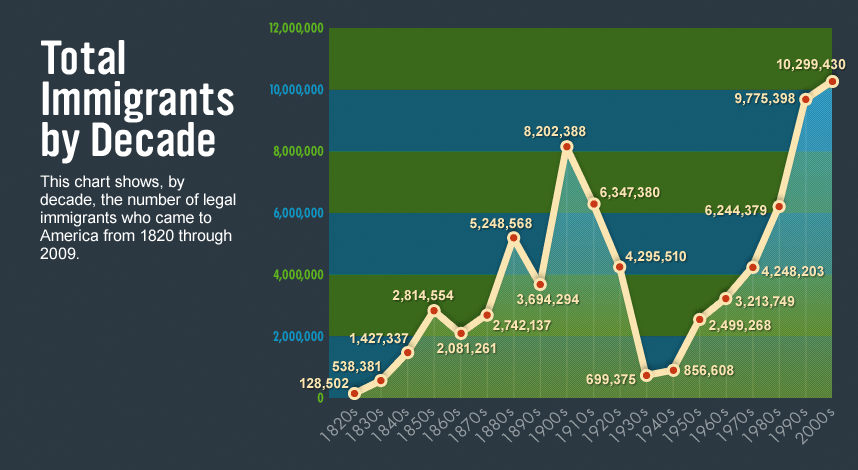
During this time, the United States was seen as a land of opportunity. The promise of jobs in factories and on farms attracted millions. By 1860, around 4 million immigrants had arrived, with large numbers coming from Germany, Ireland, and Britain. Each group brought unique cultural influences that contributed to the evolving American identity.
- Irish immigrants: Faced discrimination but played a crucial role in building infrastructure, like railroads.
- German immigrants: Established communities in the Midwest, contributing to agriculture and brewing industries.
- Chinese immigrants: Arrived during the Gold Rush and later contributed to railroad construction, particularly the Transcontinental Railroad.
Moreover, the mid to late 19th century saw the introduction of immigration policies that reflected the changing sentiments towards newcomers. The Chinese Exclusion Act of 1882 was a significant piece of legislation that halted Chinese immigration for ten years and marked the first law to prevent a specific ethnic group from entering the country. This act was a response to economic fears and racial prejudice prevalent at the time.
In addition to legislation, the establishment of immigration processing centers, like Ellis Island in 1892, marked a shift towards organized immigration. Over the next several decades, an estimated 12 million immigrants passed through Ellis Island, facing health inspections and legal scrutiny before entering the U.S.
By understanding the historical context of 19th century immigration, it becomes clear how various factors shaped the policies and experiences of immigrants during this transformative era. This period laid the groundwork for ongoing discussions about immigration in the United States today.
Key immigration laws and acts during the 19th century
The 19th century witnessed the enactment of several crucial immigration laws and acts that shaped the landscape of immigration in the United States. These laws were often responses to social, economic, and political pressures, reflecting the changing attitudes towards immigrants.
- The Naturalization Act of 1790: Although enacted at the end of the 18th century, this act set the precedent for future immigration policies. It limited naturalization to free white persons, establishing a racial criterion that influenced subsequent legislation.
- The Chinese Exclusion Act of 1882: This landmark legislation prohibited the immigration of Chinese laborers, marking the first significant law to restrict immigration based on nationality. The act was fueled by economic competition and racial prejudice, reflecting a growing nativist sentiment in American society.
- The Immigration Act of 1891: This law established the Bureau of Immigration and set the groundwork for federal control over immigration. It also included provisions for excluding individuals considered undesirable, such as those with certain health issues or criminal backgrounds.
In addition to these pivotal acts, various state laws also impacted immigration during this period. Many states implemented their own regulations, which often resulted in a patchwork of immigration policies across the nation.
- The Contract Labor Law of 1885: This act prohibited the importation of foreign laborers under contract, aiming to protect American workers from competition. However, it faced criticism for its ineffectiveness in curbing the influx of immigrant labor.
- The Immigration Restriction League (IRL) in 1894: Founded by nativists, the IRL advocated for stricter immigration policies, pushing for literacy tests and other measures to limit immigration from specific countries, particularly Southern and Eastern Europe.
These laws and organizations reflect the evolving narrative of immigration in the 19th century, where economic interests often clashed with social attitudes, leading to a complex immigration policy landscape. The implications of these acts continue to resonate in contemporary discussions about immigration in the United States.
Impact of industrialization on immigration patterns
The wave of industrialization that swept across the United States during the 19th century had a profound impact on immigration patterns. As factories proliferated, the demand for labor increased significantly, attracting millions of immigrants seeking economic opportunities. This shift was not only a catalyst for growth but also transformed the demographic landscape of the nation.
Industrialization created a need for a workforce that local populations could not satisfy alone. Cities like New York, Chicago, and Pittsburgh became hubs of activity, drawing immigrants from various countries. For instance, between 1820 and 1860, over 5 million immigrants arrived in the United States, primarily from Ireland and Germany, fleeing famine and political unrest.
- Irish immigrants: Over 1.5 million Irish immigrants arrived due to the Great Famine (1845-1852).
- German immigrants: Approximately 1 million Germans migrated, seeking better economic conditions.
- Other groups: Smaller numbers of immigrants came from Italy, Scandinavia, and Eastern Europe.
As industrialization progressed, the types of jobs available also evolved. Many immigrants found work in factories, railroads, and construction. For example, the completion of the Transcontinental Railroad in 1869 relied heavily on immigrant labor, particularly from China and Ireland. By the late 1800s, Chinese laborers made up a significant portion of the workforce in the western United States, illustrating the direct link between industrial demand and immigration.
Furthermore, industrialization influenced the social dynamics of immigrant communities. The influx of diverse populations led to the establishment of ethnic neighborhoods, such as Chinatown in San Francisco and Little Italy in New York City. These enclaves provided cultural support and helped maintain traditions while also contributing to the broader American culture.
The effects of industrialization on immigration were not solely economic; they also had significant political implications. The growing immigrant population began to influence local and national politics, leading to tensions and the rise of nativist movements aimed at restricting immigration. This complex interplay between industrial growth and immigration patterns significantly shaped the United States’ development in the 19th century.
Role of immigration in shaping urban development
During the 19th century, immigration played a crucial role in the urban development of the United States. As waves of immigrants arrived, they contributed to the rapid growth of cities, transforming them into bustling hubs of economic activity. Major urban centers like New York City, Chicago, and San Francisco experienced explosive population growth due to the influx of immigrants seeking better opportunities.
- New York City: By 1890, over 1.5 million immigrants had settled in New York, making it the largest city in the world at that time.
- Chicago: The population surged from 30,000 in 1850 to over 1 million by 1890, largely driven by immigrant labor.
- San Francisco: The Gold Rush in the 1840s attracted thousands of immigrants, leading to a population increase of over 300% in just a decade.
The contributions of immigrants were not limited to mere numbers; they also brought diverse skills and cultural influences that enriched urban life. Many immigrants worked in factories, constructed railroads, and provided services that supported the growing urban economies. This influx of labor was essential for the development of infrastructure, including roads, bridges, and public transportation systems.
For instance, the construction of the Transcontinental Railroad, completed in 1869, relied heavily on immigrant labor, particularly from Chinese and Irish workers. This significant project not only facilitated the movement of goods and people but also connected distant regions, fostering economic growth and urban expansion.
Moreover, immigration led to the establishment of ethnic neighborhoods, which became cultural enclaves that preserved the traditions and languages of various immigrant groups. Areas such as Chinatown in San Francisco and Little Italy in New York City emerged, showcasing the rich tapestry of immigrant cultures that shaped these urban landscapes.
Immigration was a key driver of urban development in the 19th century, contributing to population growth, economic expansion, and cultural diversity in American cities. The lasting impact of this period can still be seen in the urban centers of today, where immigrant communities continue to play a vital role in shaping the social and economic fabric of the nation.
Challenges faced by 19th century immigrants
The 19th century presented numerous challenges for immigrants arriving in the United States. Many faced significant hardships upon their arrival, including language barriers, cultural differences, and economic instability. These obstacles often made integration into American society particularly difficult.
- Language Barriers: Most immigrants spoke little to no English, which hindered their ability to find work, access services, and communicate with others. Estimates suggest that by 1900, nearly 40% of New York’s population was foreign-born, creating a diverse yet challenging linguistic environment.
- Employment Challenges: Many immigrants were forced to take low-paying, unskilled jobs. For instance, during the late 1800s, over 70% of immigrants worked in factories or on construction sites, often enduring long hours and unsafe conditions.
- Housing Issues: In urban areas, immigrants frequently encountered overcrowded living conditions. Tenement buildings, which housed large families in small spaces, became common. By 1900, it was reported that more than 60% of New York’s residents lived in tenements.
Social discrimination was another significant hurdle. Immigrants from certain countries, particularly those from Ireland and Italy, often faced hostility and prejudice. They were sometimes labeled as undesirable or criminal, fueling social tensions within communities. For example, Irish immigrants faced severe discrimination during the 1840s due to the Great Famine, which led to a massive influx of Irish people fleeing to the U.S.
Health-related challenges also plagued many immigrants. Poor sanitation in urban areas contributed to the spread of diseases, such as cholera and typhoid fever. In 1892, the cholera outbreak in New York City resulted in over 6,000 deaths, disproportionately affecting immigrant communities.
The 19th century was marked by numerous challenges for immigrants. From overcoming language barriers to facing discrimination and health crises, these obstacles significantly impacted their ability to assimilate and thrive in a new country.
Public attitudes and political debates on immigration
Throughout the 19th century, public attitudes towards immigration in the United States were highly polarized. As waves of immigrants arrived, sentiments ranged from acceptance and support to hostility and exclusion. This period witnessed the emergence of organized movements against immigration, prominently among native-born citizens who feared economic competition and cultural dilution.
One notable example was the rise of the Know-Nothing Party in the 1850s. This political party, officially known as the American Party, was characterized by its strong anti-immigrant stance, particularly against Irish and German immigrants. The party capitalized on the fears of native-born citizens, advocating for policies that aimed to limit immigration and promote nativism.
- Increased job competition: Many native workers believed that immigrants were taking jobs away from them, leading to widespread resentment.
- Cultural differences: Immigrants often brought different languages and customs, which some viewed as a threat to American values.
- Religious tensions: The influx of Catholic Irish immigrants heightened religious conflicts, particularly in predominantly Protestant communities.
Political debates surrounding immigration often intensified during economic downturns. For instance, during the Panic of 1873, many Americans blamed immigrants for the economic crisis, leading to increased calls for restrictive immigration laws. This culminated in the passage of the Chinese Exclusion Act of 1882, which specifically targeted Chinese immigrants, reflecting the growing sentiment that certain groups were undesirable.
By the late 19th century, public opinion began to shift again, particularly as industrialists recognized the importance of immigrant labor for economic growth. Figures such as Andrew Carnegie argued that immigrants were essential for filling labor shortages and driving industrial expansion. This complex interplay of attitudes highlights the contradictions in American society’s views on immigration.
Public attitudes and political debates on immigration throughout the 19th century were shaped by a mix of economic concerns, cultural anxieties, and political movements. As the nation grappled with these issues, the landscape of immigration policy evolved, reflecting the ongoing struggle between inclusion and exclusion in American society.
Economic effects of immigration in the 19th century
The economic effects of immigration during the 19th century were profound and multifaceted. Immigrants significantly influenced labor markets, industrial growth, and overall economic expansion in the United States. Their contributions were essential in various sectors, helping to shape the nation’s economy.
Firstly, immigrants provided a ready supply of labor that fueled the rapid industrialization of the country. By the mid-1800s, industries such as textiles, railroads, and manufacturing relied heavily on immigrant workers. For instance, by 1860, over 40% of the workforce in cities like New York and Chicago comprised immigrants, many of whom worked in factories under challenging conditions.
- Labor Supply: Immigrants filled labor shortages, especially during the industrial boom.
- Entrepreneurship: Many immigrants started their own businesses, contributing to job creation.
- Wages: While they often accepted lower wages, their presence helped stabilize labor costs.
Moreover, immigrants played a crucial role in the expansion of infrastructure. The construction of railroads, bridges, and roads was largely dependent on immigrant labor. Notably, the completion of the Transcontinental Railroad in 1869 involved thousands of Chinese laborers who faced harsh conditions and discrimination. This project not only connected the coasts but also facilitated commerce and trade across the country.
Additionally, the economic contributions of immigrants can be seen in their influence on local economies. For example, in cities like San Francisco, immigrants established vibrant communities that supported local businesses. By 1880, Chinese immigrants alone owned over 90% of the laundry businesses in the city, demonstrating their entrepreneurial spirit and economic impact.
The economic effects of immigration in the 19th century were significant, contributing to labor supply, infrastructure development, and local business growth. These factors collectively shaped the economic landscape of the United States, laying the groundwork for its emergence as an industrial power.
Comparison of immigration policies between countries
During the 19th century, various countries adopted distinct immigration policies to manage the influx of newcomers. In the United States, the policies evolved significantly, reflecting the changing social and economic landscape. In contrast, European countries like Germany and the United Kingdom implemented their own strategies to address immigration.
| Country | Policy Type | Key Features |
|---|---|---|
| United States | Open Door Policy | Encouraged immigration, particularly from Europe; minimal restrictions until the 1880s. |
| Germany | Restrictive Policies | Focus on internal migration and limited immigration; emphasis on assimilating immigrants. |
| United Kingdom | Colonial Preference | Encouraged immigrants from the colonies, while imposing restrictions on non-colonial immigrants. |
| France | Assimilation Policy | Promoted integration of immigrants; provided citizenship under certain conditions. |
The United States adopted an open-door policy during the early part of the century, welcoming millions of immigrants. This approach was largely driven by the demand for labor in industries such as railroads and factories. For instance, between 1820 and 1860, approximately 5 million immigrants arrived, predominantly from Ireland and Germany.
- United States: Minimal restrictions until the 1880s.
- Germany: Emphasis on controlling immigration due to economic concerns.
- United Kingdom: Prioritized immigrants from British colonies.
- France: Offered pathways to citizenship for assimilated immigrants.
In contrast, Germany’s restrictive policies were aimed at curbing immigration, focusing instead on managing internal migration. This included policies that encouraged rural populations to settle in urban areas. The UK, on the other hand, favored immigrants from its colonies, reflecting its imperial interests. For example, the British Nationality Act of 1948 allowed citizens from Commonwealth nations to settle in the UK.
Overall, these varied approaches to immigration policy illustrate the complex factors influencing each nation’s stance during the 19th century. Economic needs, demographic changes, and social attitudes played significant roles in shaping these policies.
Legacy of 19th century immigration policies today
The legacy of 19th century immigration policies continues to shape contemporary discussions surrounding immigration in the United States and beyond. The frameworks established during this period laid the groundwork for modern immigration laws and attitudes.
One significant aspect is the regulatory framework that emerged. The 1882 Chinese Exclusion Act, for instance, marked the first time the U.S. implemented a federal law specifically aimed at restricting immigration based on nationality. This act not only set a precedent but also influenced future policies targeting specific groups.
- Immigration quotas: The 1924 Immigration Act established quotas favoring Northern and Western Europeans, a policy rooted in the 19th century’s racial and ethnic biases.
- Border enforcement: The methods of border control and immigration enforcement developed during the 19th century set the stage for today’s immigration enforcement practices.
- Cultural perceptions: The stigmatization of certain immigrant groups from the 19th century persists, influencing public perceptions and policies.
For example, the long-standing debates over immigration reform reflect concerns that can be traced back to 19th century sentiments. The notion of “American identity” has evolved but still often references the exclusionary practices of the past. In 2021, discussions surrounding the Deferred Action for Childhood Arrivals (DACA) program echoed the same fears of the “other” that early immigration policies instilled.
Moreover, the economic contributions of immigrants today can also be linked to the influx seen in the 19th century. Immigrants then contributed significantly to the labor force, fostering industrial growth. Today, immigrants represent approximately 17% of the U.S. workforce, underscoring their vital role in various sectors, from technology to agriculture.
In education, the narrative surrounding immigrants continues to evolve. Educational institutions now often serve as platforms for discussions on diversity, inclusion, and the historical context of immigration policies. This emphasis reflects a growing recognition of the complex history and contributions of immigrants in shaping society.
Frequently Asked Questions
What were the main reasons for immigration in the 19th century?
The primary reasons for immigration during the 19th century included economic opportunities, political instability, and religious persecution. Many sought better living conditions, job prospects, and the chance to escape difficult circumstances in their home countries.
How did immigration policies differ between countries?
Immigration policies varied significantly among countries, with some, like the United States, promoting open-door policies to attract labor. In contrast, others implemented stricter regulations to control the flow of immigrants, reflecting differing national priorities and social attitudes.
What were the social effects of 19th century immigration?
Socially, 19th century immigration led to cultural diversity in many regions, fostering the establishment of ethnic communities. However, it also generated tensions and conflicts, as native populations often reacted negatively to the influx of newcomers, leading to discrimination and social strife.
How did immigration impact labor markets in the 19th century?
Immigrants played a crucial role in shaping labor markets by supplying a large workforce needed for industrial growth. They often accepted lower wages and worked in challenging conditions, driving economic expansion while simultaneously sparking debates about labor rights and fair compensation.
What is the lasting impact of 19th century immigration policies?
The legacy of 19th century immigration policies continues to influence modern immigration debates, shaping perspectives on national identity, economic contributions, and the rights of immigrants. This historical context remains relevant as societies grapple with current immigration challenges.
Conclusion
The 19th century immigration policies had significant economic effects, shaped by varying country-specific approaches, and continue to influence modern discussions on immigration. Understanding these aspects allows us to appreciate the complexities of immigration and its enduring legacy in shaping societies. By grasping the impact of historical immigration policies, readers can engage in informed discussions, advocate for effective policies, and contribute to a more comprehensive understanding of immigration’s role in economic development and cultural exchange. Take the next step by exploring further resources on immigration policy history and its implications for today’s society. Engage with local advocacy groups and participate in discussions to make your voice heard.