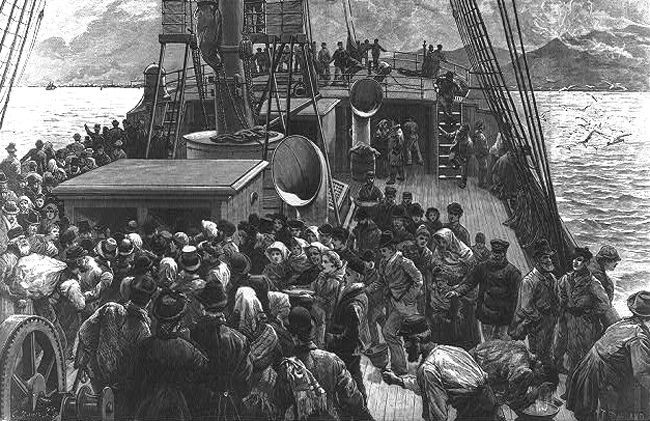
Have you ever considered why the majority of 19th-century immigrants were male? This demographic trend raises significant questions about the factors influencing migration patterns during this transformative period in history.
This article will explore the economic opportunities and prevailing gender roles that shaped male immigration, shedding light on the societal and cultural influences that drove men to seek better prospects abroad. Understanding these dynamics is essential for grasping the complexities of immigration.
We will examine the impact of labor demands, the significance of gender expectations, and the broader social context that contributed to this male-dominated migration phenomenon.
Economic opportunities and gender roles in the 19th century
During the 19th century, economic opportunities played a pivotal role in shaping immigration patterns. The onset of the Industrial Revolution created a surge in demand for labor in the United States and other industrialized nations. This demand primarily attracted men who sought better job prospects and wages, often leaving behind their families.
In many European countries, particularly in places like Ireland and Germany, men faced limited opportunities. For instance, the Great Famine in Ireland (1845-1852) prompted a mass exodus of men seeking work in America. These men were often motivated by the hope of sending remittances back home, thus reinforcing traditional gender roles where men were seen as providers.
- Labor demand: Industries such as railroads, coal mining, and manufacturing required a significant workforce.
- Gender roles: Men were traditionally viewed as the breadwinners, while women were often expected to manage the household.
- Migration patterns: Many men migrated alone at first, with the intention of bringing their families later if they succeeded.
An example of this can be seen in the mining towns of Pennsylvania, where men flocked to work in coal mines during the mid-19th century. The harsh working conditions and long hours were often deemed acceptable for men, who were expected to endure them for the sake of their families. In contrast, women and children typically remained behind, managing farms or households in their home countries.
Moreover, as economic opportunities expanded in urban areas, the perception of women’s roles began to shift slightly. Some women started to enter the workforce, particularly in textile mills and domestic service. However, their participation was often seen as supplementary to the male breadwinner’s income. For instance, the Lowell Mills in Massachusetts employed thousands of young women from rural areas, but the majority of these women were expected to return to traditional roles once they married.
Thus, the interplay of economic opportunities and established gender roles significantly influenced the demographic makeup of 19th-century immigrants. Men predominated in migration statistics, driven by both necessity and cultural expectations, while women remained largely in their traditional spheres.
The impact of labor demands on male immigration
The labor demands of the 19th century significantly influenced the influx of male immigrants. As industries expanded, the need for a robust workforce surged, particularly in sectors such as manufacturing, construction, and agriculture. This created an environment where men were more likely to seek opportunities abroad.
Several factors contributed to the predominance of male immigrants during this period:
- Industrial Growth: The rise of factories and urban centers required an immense labor supply. For instance, cities like New York and Chicago flourished due to their capacity to attract workers, primarily young males.
- Economic Incentives: Higher wages and better job prospects in the United States compared to Europe motivated many men to immigrate. Reports indicated that laborers could earn up to three times more in American factories than in their home countries.
- Improved Transportation: Advancements in transportation, such as steamships, made it easier and quicker for men to travel across the Atlantic. The journey that once took months could now be completed in weeks, further encouraging migration.
Moreover, the societal structures of the time often placed men in the role of primary breadwinners. This expectation pushed many men to leave their families behind in search of better opportunities. For example, the Irish Potato Famine (1845-1852) saw a massive wave of Irish men emigrating to the United States, many of whom left their families in Ireland.
The impact of labor demands can also be illustrated through specific statistics. Between 1820 and 1860, it is estimated that around 4.5 million immigrants arrived in the United States, with approximately 70% being male. This gender imbalance was primarily driven by the demand for labor in burgeoning industries.
The labor demands of the 19th century created a unique immigration landscape that favored male immigrants. The combination of economic opportunity, societal expectations, and advancements in transportation led to a significant male-dominated immigration pattern during this transformative period.
Social and cultural factors influencing male migration
The social and cultural environment of the 19th century was a significant driver of male migration. Many men sought to escape oppressive social conditions, including rigid class structures and limited opportunities for upward mobility. In Europe, particularly in countries like Ireland and Italy, poverty and famine forced many men to seek better lives abroad.
Moreover, the notion of masculinity during this period was closely tied to the ability to provide for a family. This cultural expectation pushed men to migrate in search of better job prospects. The ideal of the “breadwinner” became a strong motivator, as men aimed to fulfill their roles as providers in new environments.
- Social class: Many male immigrants came from lower socioeconomic backgrounds, where opportunities were scarce.
- Rural to urban migration: Men often left rural areas, driven by the promise of urban jobs.
- Family separation: Some men migrated first to establish themselves before bringing their families, emphasizing their role as providers.
Religious persecution also contributed to male migration. Groups such as Jews fleeing pogroms in Eastern Europe or Catholics escaping sectarian violence in Ireland sought refuge in places like the United States. For instance, between 1881 and 1914, approximately 2 million Jews emigrated from Russia, fleeing anti-Semitic violence and seeking better opportunities.
Furthermore, the cultural perception of America as a “land of opportunity” attracted many men. Stories of success and wealth were circulated among communities, creating a powerful allure. This perception was fueled by immigrant networks that shared information about job prospects and living conditions, which often exaggerated the realities of life in America.
Social and cultural factors, including economic necessity, family expectations, and the quest for personal freedom, played critical roles in shaping the predominance of male immigrants during the 19th century. These motivations combined to create a unique demographic shift, as men left their home countries in search of better lives.
The role of family separation in 19th-century immigration
Family separation was a significant aspect of 19th-century immigration, influencing many men to migrate alone. Economic necessity often dictated that men leave their families behind in search of better opportunities.
For many immigrants, the decision to migrate was not made lightly. In numerous cases, male immigrants were the primary earners, and their departure aimed to establish a stable financial foundation for their families. This was particularly true in regions affected by poverty and limited job prospects.
- Economic necessity: Many men left their families to secure jobs in burgeoning industries.
- Financial remittances: Immigrants often sent money back home, helping to support their families and eventually enabling them to reunite.
- Temporary separation: Some men viewed their migration as a short-term solution, expecting to return once they had saved enough money.
Statistics from the late 1800s reveal that a significant number of male immigrants intended to bring their families to the United States after establishing themselves. For instance, the U.S. Census of 1880 indicated that approximately 60% of foreign-born men were living apart from their families.
One notable example is the migration of Italian men during this era. Many left their families in Italy with the intention of eventually bringing them to America. It is estimated that between 1880 and 1920, around 4 million Italians immigrated to the United States, with a large percentage initially migrating alone.
The emotional toll of family separation was considerable, as many men faced loneliness and hardship in their new environment. Letters exchanged between family members were often filled with longing and hope for reunion, underscoring the personal sacrifices involved in their migration.
Family separation served as a critical driving force behind male immigration in the 19th century. The desire to improve living conditions for their families, coupled with the challenges of labor demands, shaped the immigration landscape of the time.
Immigration policies and their effect on gender distribution
The immigration policies of the 19th century played a critical role in shaping the gender distribution among immigrants. Various regulations and practices often favored the entry of male laborers over female immigrants. This trend was particularly evident in the United States, where policies aimed at bolstering the workforce facilitated a predominantly male influx.
For instance, during the mid-1800s, the U.S. government implemented measures such as the Homestead Act of 1862, which encouraged settlement in the West. This act primarily attracted men seeking economic opportunities, contributing to a skewed gender ratio among new settlers. By 1870, men constituted approximately 80% of the immigrant population in many areas.
- Labor demands: Many policies were designed to meet the urgent labor needs of industries, which predominantly required male workers.
- Family reunification restrictions: Legal frameworks often made it difficult for women and families to immigrate, as men typically arrived first to establish themselves.
- Work visa regulations: The focus on labor migration meant that most work visas were issued to men, further complicating female immigration.
Moreover, the societal norms of the time reinforced these patterns. Women were often viewed through the lens of domesticity, and many immigration policies reflected the belief that men were the primary breadwinners. Consequently, the expectation was that men would migrate first to secure jobs and then send for their families later, a practice that was common among immigrant communities.
In practical terms, this meant that in cities like New York, the immigrant population was heavily male-dominated. By the late 19th century, estimates suggested that for every 100 immigrant women, there were approximately 200 immigrant men. This gender imbalance had lasting implications for community dynamics and family structures.
Additionally, certain groups faced more significant barriers than others. For instance, policies targeting specific ethnic groups often resulted in fewer opportunities for women from those communities. This was particularly evident for immigrants from regions such as Eastern Europe, where men were favored for labor-intensive industries, further exacerbating gender disparities.
The influence of transportation and travel costs on immigrant demographics
The evolution of transportation in the 19th century significantly impacted the demographics of immigrants. The advent of steamships, which began to replace sailing vessels in the 1830s, drastically reduced travel times across the Atlantic. For example, a trip that once took six weeks could now be completed in as little as ten days. This reduction in time made migration more feasible for many.
However, despite the advances in transportation, the costs associated with travel remained a barrier for many potential immigrants. The average fare for a steamship ticket ranged from $30 to $150, depending on the class and destination. For many working-class individuals, this was a substantial amount, often equivalent to several months’ wages.
- Ticket costs: The price of a third-class ticket was typically around $30, making it accessible for many men seeking better opportunities.
- Economic realities: In contrast, first-class tickets could exceed $150, limiting access to wealthier individuals and families.
- Travel conditions: Third-class accommodations were overcrowded and uncomfortable, which often discouraged women and families from traveling together.
As a result, many men opted to migrate alone, driven by the hope of establishing themselves financially before sending for their families. The case of Irish immigrants during the Great Famine of the 1840s illustrates this trend. Men left Ireland in droves to find work in America, with many planning to reunite with their families once they secured stable employment.
Moreover, the geographical locations of ports also influenced migration patterns. Cities like New York and Boston became primary entry points for immigrants, leading to a concentration of male workers in industries such as construction and manufacturing. For instance, by 1880, over 70% of immigrants in New York were male, a statistic that can be attributed to both the transportation costs and the opportunities available in urban centers.
While transportation advancements made migration more accessible, the costs associated with travel predominantly influenced the gender demographics of 19th-century immigrants. The combination of high fares and the desire for economic improvement resulted in a male-dominated migration pattern, laying the foundation for future immigrant experiences.
Comparing male and female immigrant experiences
The experiences of male and female immigrants in the 19th century were markedly different, shaped by societal roles, economic opportunities, and legal standings. Understanding these differences provides insight into the broader context of immigration during this period.
Men typically sought employment opportunities that were abundant in industrializing nations. They often worked in sectors such as:
- Mining
- Construction
- Manufacturing
For instance, in the United States, many Irish immigrants found work in the burgeoning railroad industry, which required a large labor force.
In contrast, women faced numerous barriers, limiting their employment options. Many women who immigrated were often relegated to roles such as:
- Domestic servants
- Textile workers
- Factory laborers
For example, female immigrants from Germany and Italy frequently took jobs in garment factories, where working conditions were often harsh and wages low.
Social expectations also influenced the immigrant experience. Men were often viewed as the primary breadwinners, expected to support their families. Women, however, were generally seen as caretakers, leading to:
- Isolation in domestic roles
- Limited access to education and professional development
This disparity in roles contributed to a slower integration process for women, who had to navigate both cultural and economic challenges in their new environments.
Moreover, immigration laws of the time further complicated these experiences. Certain laws favored male immigration, often due to their perceived economic contributions. For instance, the Chinese Exclusion Act of 1882 specifically targeted male immigrants, leading to a significant gender imbalance within Asian immigrant communities.
While male immigrants often enjoyed greater mobility and job opportunities, female immigrants faced distinct challenges that shaped their experiences and roles in society. Understanding these differences highlights the complexities of 19th-century immigration and its long-lasting impacts on gender dynamics.
The transition from single male immigrants to family migration patterns
The 19th century marked a significant shift in immigration patterns, transitioning from predominantly single male immigrants to families migrating together. This change was influenced by various factors, including socio-economic conditions, cultural expectations, and evolving immigration policies.
Initially, many immigrants were young men seeking work opportunities. For instance, between 1820 and 1860, over 75% of immigrants arriving in the United States were male. These single men often intended to earn money and return home, contributing to a gender imbalance in immigrant populations.
- Labor demand: Industries such as railroads and mining required a large workforce, attracting males.
- Economic stability: As immigrants settled and found stability, they began to send for their families.
- Cultural factors: Many cultures emphasized family cohesion, motivating men to bring their families to the new world.
By the late 19th century, the dynamics shifted. Immigration statistics show that by 1900, approximately 50% of immigrants were female. This shift was indicative of changing aspirations, where families sought to establish permanent roots in America rather than temporary labor arrangements.
For example, the introduction of the Immigrant Act of 1924 aimed to limit immigration but also highlighted the increasing presence of families. It set quotas that favored certain nationalities, which often included families rather than single individuals, reflecting a societal shift towards viewing immigration as a family endeavor.
Moreover, the industrial revolution created new opportunities for women, leading to a rise in the number of women immigrating alongside their husbands or as heads of households. This transition was not only a demographic change but also marked a transformation in the roles women played within immigrant communities.
The transition from single male immigrants to family migration patterns was shaped by evolving economic opportunities, cultural expectations, and immigration policies. This shift not only balanced the gender ratio among immigrants but also contributed to the formation of vibrant, diverse communities across the United States.
Long-term demographic effects of predominantly male immigration
The long-term demographic effects of predominantly male immigration in the 19th century have been profound and multifaceted. One significant outcome was the skewed gender ratio in many immigrant communities, particularly in urban centers. For instance, cities like Chicago and San Francisco experienced an influx of male immigrants, resulting in ratios of men to women that could reach as high as 7:1 in certain neighborhoods.
This gender imbalance had several implications for social structures and family formation. With fewer women available, many men remained single, which delayed family formation and contributed to a demographic trend of single households. This phenomenon was particularly evident in mining towns and industrial hubs, where the concentration of male labor attracted a workforce but lacked family-supporting environments.
- Delayed family formation: Many men postponed marriage and childbearing due to the absence of women.
- Social isolation: Predominantly male communities often faced challenges related to social cohesion and support systems.
- Economic effects: The lack of women in the workforce limited the development of certain industries, particularly those focused on family-oriented services.
Moreover, as immigrant communities evolved, the absence of women led to unique cultural adaptations. For example, the establishment of social clubs and fraternal organizations served to create a semblance of community and support among men. These institutions often provided not only social connections but also crucial resources for navigating life in a new country.
By the late 19th century, as immigration patterns began to shift towards family migration, the demographic landscape transformed once again. Families started to migrate, leading to a more balanced gender ratio and a gradual integration of women into the workforce. This shift allowed for the establishment of family-centric institutions and services, contributing to the development of more stable communities.
The long-term demographic effects of predominantly male immigration during the 19th century were significant. These effects included skewed gender ratios, delayed family formation, and the emergence of unique community structures that shaped the social fabric of immigrant life in America.
Frequently Asked Questions
Why were most immigrants in the 19th century male?
The predominance of male immigrants in the 19th century can be attributed to economic factors, such as the demand for labor in emerging industries. Additionally, social norms often prioritized male migration, as men sought opportunities to support their families back home.
How did female immigration trends change over time?
Initially, female immigration was less common, but over time, there was a shift towards family migration. As societal roles evolved and labor opportunities expanded, more women began to immigrate, seeking better living conditions and opportunities.
What were the challenges faced by female immigrants?
Female immigrants faced unique challenges, including limited job opportunities and societal expectations. Many encountered difficulties such as discrimination in the workforce and the struggle for independence in male-dominated environments.
How did predominantly male immigration affect family structures?
The influx of male immigrants led to significant changes in family structures. Initially, many men migrated alone, but this later resulted in family reunification as women and children joined them, altering community dynamics and family roles.
What impact did male immigration have on society?
Male immigration in the 19th century had profound effects on society, including workforce expansion and urban growth. This demographic shift contributed to the development of diverse communities and shaped cultural landscapes in many regions.
Conclusion
The 19th century saw distinct experiences for male and female immigrants, with men often facing fewer societal constraints. Additionally, migration patterns evolved from single males to family units, leading to significant demographic changes that shaped communities. These factors highlight the complex dynamics of immigration during this era. Understanding these historical patterns can enhance our awareness of contemporary immigration issues. By recognizing the roles of gender and family in migration, we can foster more inclusive discussions and policies that reflect the needs of diverse immigrant populations. To delve deeper into the implications of 19th-century immigration trends, consider exploring further resources or engaging in community discussions that promote awareness and understanding of immigration history.