
The nineteenth-century American West was, for most of its first three decades, a society almost without women. That single demographic fact shaped how men lived, worked, danced, kept house and formed attachments, and it has left historians with a body of evidence that is rich, awkward and easy to misread in both directions.
The numbers behind everything else
The 1850 census of California, taken two years into the Gold Rush, recorded a population that was roughly ninety-two per cent male. In individual mining camps the imbalance was steeper still, with some counting fewer than five women in several hundred residents. Cattle outfits, railroad construction gangs, logging camps and army posts produced the same shape.
Men therefore did the work that eastern convention assigned to women. They cooked, washed, sewed, nursed each other through illness and kept house in pairs. None of this was remarked upon at the time, because there was no alternative, and much of it appears in letters and diaries with no self-consciousness at all.
A problem of vocabulary
The word homosexual was coined in German in 1869 and did not come into general English use until the 1890s. Heterosexual followed later and initially meant something rather different. For most of the century covered here, the categories that organise modern discussion of the subject simply did not exist in the minds of the people involved.
This is not a technicality. A miner in 1852 who shared a cabin, a claim and a bed with the same man for eleven years did not think of himself as belonging to a type of person. He thought of himself as having a partner. Historians of the period read behaviour, household arrangements, wills and expressions of grief, and are generally careful not to attach an identity that nobody in the record would have recognised.
Dancing
The best-documented and most frequently misunderstood custom is the mining-camp dance. With no women present, half the men danced the woman’s part, marked by a bandana tied around the arm or a patch of cloth sewn on the trousers.
Participants described these evenings in letters home without embarrassment, and the accounts are numerous enough across California and Nevada to establish the practice as ordinary rather than exceptional. Whether any given dance carried erotic meaning is exactly the sort of question the sources cannot settle, and the honest answer is that it varied and mostly went unrecorded.
Partnerships
The most substantial evidence sits in the institution of partners, spelled pardners in much of the period writing. Two men would pool capital, work a claim together, share a cabin, hold property jointly and name each other in wills.
The study by Susan Lee Johnson of the southern mines, Roaring Camp, published in 2000, reconstructed dozens of these households from probate files, court records and correspondence. Some read as business arrangements and nothing more. Others contain expressions of attachment and, at the death of one partner, of grief that is difficult to read as anything but conjugal.
The camps were also ethnically layered in ways that mattered. Chinese, Mexican, Chilean and French miners lived in their own quarters with their own domestic customs, and Anglo-American observers wrote about those households with a mixture of prurience and contempt that tells the reader more about the observer than the observed.
Passing
The frontier offered something the settled East did not: a place where the history of a person could not easily be checked. A significant number of people assigned female at birth lived as men, and the record of them is unusually good because their circumstances often became public at death.
Charley Parkhurst drove stagecoaches in California for two decades, was known for skill with a six-horse team, voted in the presidential election of 1868, and was found at death in Watsonville in December 1879 to have been assigned female at birth. The discovery made national newspapers.
The book by Peter Boag, Re-Dressing America’s Frontier Past, published in 2011, assembled scores of comparable cases from western newspapers and demonstrated something important: these stories were common enough to be a recognised newspaper genre, and were later written out of the official memory of the region as the West was repackaged for a national audience.
Jeanne Bonnet, a Frenchwoman in San Francisco, was arrested repeatedly under the ordinance of the city against appearing in clothing not belonging to one’s sex, organised a group of women who left the brothels, and was shot dead through a window in 1876. The case was never solved.
Indigenous traditions
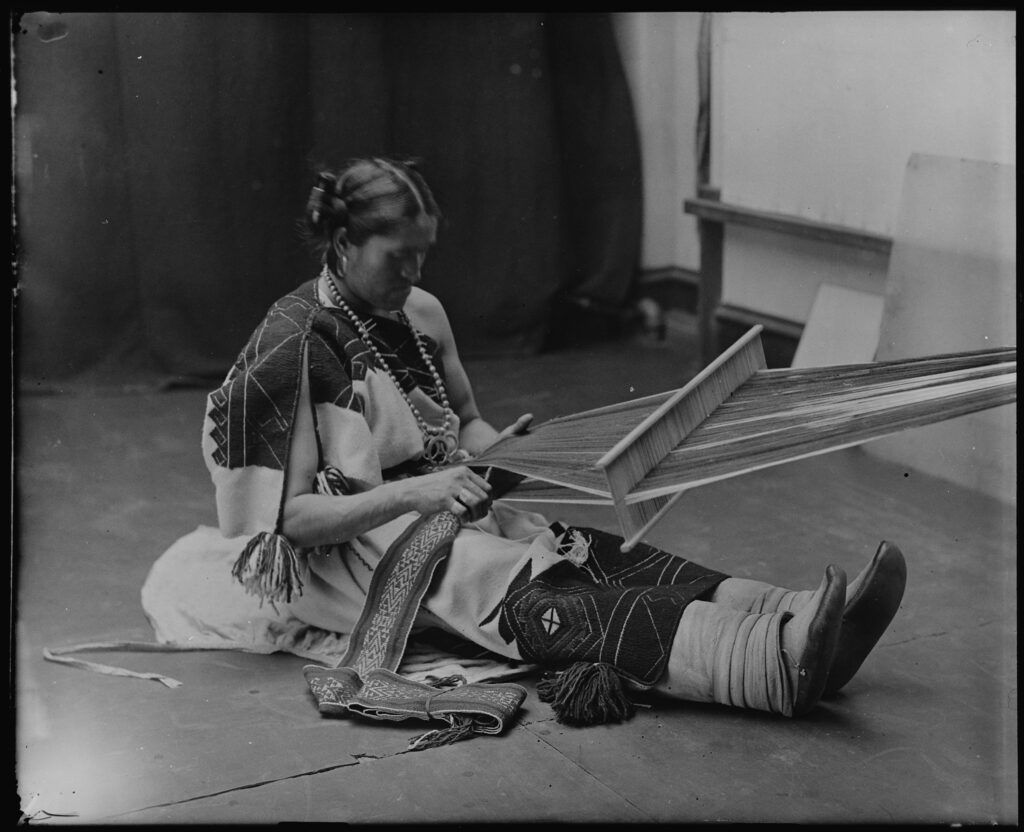
Many Native nations of the Plains and Southwest recognised social roles that did not map onto a two-gender system, described today with the pan-tribal term Two-Spirit, adopted in 1990 and preferred to the older ethnographic label.
We’wha of Zuni, a lhamana, was among the most accomplished weavers and potters of the pueblo, served as a cultural representative, travelled to Washington in 1886 and was received there as a distinguished visitor. Osh-Tisch, a Crow bade, fought at the Battle of the Rosebud in 1876 and remained a respected figure in the community.
These roles were specific to particular nations and to their own religious and social systems. They are not an Indigenous version of a Euro-American category, and treating them as one flattens what they actually were. Indian agents in the 1890s attempted to suppress them directly, cutting hair and forcing men’s clothing on those who held the role, an episode the Crow resisted with some success.
The law
Sodomy statutes existed across the territories, inherited from English common law and colonial codes, but prosecutions were comparatively rare and tended to appear where an assault, a minor, or a racial boundary was involved.
Western authorities were far more energetic about clothing. The San Francisco ordinance of 1863 against appearing in public in a dress not belonging to one’s sex was enforced for decades and copied by cities across the region. Where the law took an interest, it was usually in visibility rather than intimacy.
What the record can say
The evidence supports a modest and firm conclusion. Same-sex intimacy, domestic partnership and gender crossing were present throughout the nineteenth-century West, were often unremarkable to those living alongside them, and were systematically written out of the history of the region in the decades after 1890, when the frontier was being turned into a national myth about a particular kind of man.
What the evidence rarely supports is a confident statement about any individual. Diaries were burned, letters were edited by descendants, and the language available to the writers did not include the terms a modern reader wants. The careful historian says what the document says, and stops.