Have you ever considered how preachers shaped the moral and social landscape of the 19th century? As influential figures, they not only delivered sermons but also addressed pressing societal issues, influencing public opinion and community values.
This article will explore the significant role of preachers during this transformative era, highlighting key figures and the impact of religious revivals. Understanding these dynamics reveals how religious leaders navigated the complexities of their time, providing insights into their lasting legacy.
We will delve into the essential themes, including the role of preachers in society, notable figures, and the far-reaching effects of revivals, offering a comprehensive view of this pivotal period in religious history.
The role of preachers in 19th century society
In the 19th century, preachers played a significant role in shaping societal values and norms. They were not only religious leaders but also influential figures in the community, often guiding social and political discourse. Their sermons addressed pressing issues such as abolition, women’s rights, and temperance, reflecting the era’s moral and ethical struggles.
Preachers served as educators, providing instruction to both the literate and illiterate. Many churches established schools, where clergy taught reading, writing, and basic arithmetic. For instance, in 1830, the African Methodist Episcopal Church promoted education among freed slaves, emphasizing the importance of knowledge in securing their rights.
- Social Reform: Preachers were at the forefront of various reform movements, advocating for change within society. Notable figures included:
- Henry Ward Beecher, who passionately supported the abolition of slavery.
- Sojourner Truth, who combined her preaching with activism for women’s rights.
- Charles Finney, known for his revivalist meetings that pushed for moral reform.
Moreover, the rise of the Second Great Awakening in the early 1800s brought about a surge in evangelical fervor. Preachers like George Whitefield and Charles G. Finney emphasized personal salvation and a direct relationship with God, which resonated deeply with the populace. This revival movement led to increased church attendance and engagement, significantly influencing American culture.
Preachers also acted as community leaders, often addressing local and national issues from the pulpit. During the Civil War, many clergymen used their platforms to promote patriotism and moral justification for the conflict. In 1863, for example, Reverend William H. Channing delivered a sermon that rallied support for Union soldiers, showcasing the intertwining of faith and civic duty.
The role of preachers in 19th century society extended beyond spirituality. They were pivotal in advocating for social change, educating the masses, and influencing political thought, ultimately shaping the moral landscape of their time.
Key figures in 19th century preaching
Throughout the 19th century, several preachers emerged as key figures, influencing both religious thought and social movements. Their sermons not only shaped spiritual beliefs but also addressed pressing societal issues of the time.
- Henry Ward Beecher (1813-1887): A prominent Congregationalist minister, Beecher was known for his dynamic preaching style. He was an ardent abolitionist and used his platform to advocate for the end of slavery, famously delivering sermons that stirred public opinion against the institution.
- Charles Spurgeon (1834-1892): Often referred to as the “Prince of Preachers,” Spurgeon was a British Baptist preacher who gained fame for his powerful oratory. His sermons reached thousands, and he founded the Metropolitan Tabernacle in London, which became a center for Christian worship.
- Sojourner Truth (c. 1797-1883): A former enslaved person, Truth became a leading abolitionist and women’s rights activist. Her speeches, including the famous “Ain’t I a Woman?” address, highlighted the intersections of gender and race, challenging societal norms.
- Jonathan Edwards (1703-1758): While his most influential work occurred in the 18th century, Edwards’ legacy continued into the 19th century. His fire-and-brimstone preaching style influenced many revivalist movements, emphasizing the importance of personal piety and moral living.
These preachers not only conveyed religious messages but also engaged with the political and social issues of their time. For instance, Beecher’s activism against slavery played a pivotal role in mobilizing public sentiment, while Spurgeon’s teachings emphasized social justice and compassion.
Furthermore, many of these figures were instrumental in the Second Great Awakening, a religious revival movement that encouraged a personal connection to faith. Their influence reshaped communities and provided a voice for the marginalized, demonstrating the power of preaching in effecting change.
The 19th century was marked by remarkable preachers whose contributions extended beyond the pulpit. They left a lasting impact on both the church and society, illustrating the profound role of religious leaders in shaping cultural and moral landscapes.
The impact of religious revivals during the 19th century
Religious revivals of the 19th century had a profound impact on American society, leading to significant changes in religious practices and social reforms. These movements energized congregations and brought forth new denominations, reshaping the religious landscape.
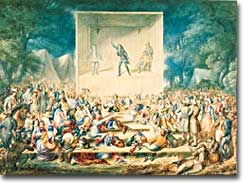
The Second Great Awakening, which began in the late 18th century and peaked in the 1820s and 1830s, is one of the most notable examples. This revival emphasized personal faith and emotional connection to God. It inspired thousands to attend camp meetings, where preachers delivered passionate sermons.
- Increased church attendance: Many denominations saw a surge in membership, particularly among Methodists and Baptists.
- Social reforms: Revivals often sparked movements for abolition, temperance, and women’s rights.
- New religious ideas: The revival challenged traditional beliefs, leading to the emergence of new sects like the Mormons and the Seventh-day Adventists.
For instance, Charles Finney, a prominent preacher during this era, advocated for social justice and sparked a wave of reform movements. His sermons often addressed the moral failings of society, calling for action against slavery and advocating for women’s roles in the church.
In addition to Finney, the work of other key figures like Lyman Beecher and Peter Cartwright contributed to the revival’s momentum. Beecher’s sermons were instrumental in promoting social reform, while Cartwright’s fiery preaching style attracted large crowds, helping to spread the revivalist message.
| Revivalist | Key Contribution | Notable Impact |
|---|---|---|
| Charles Finney | Emphasis on personal conversion | Increased participation in social reform |
| Lyman Beecher | Advocated for temperance and abolition | Influenced public opinion and policy |
| Peter Cartwright | Dynamic camp meetings | Revitalized interest in evangelicalism |
Overall, the impact of these religious revivals during the 19th century was far-reaching, fostering a sense of community and igniting movements that would shape the social fabric of America well into the future.
Preaching styles and methods of the 19th century
In the 19th century, the styles and methods of preaching were diverse, reflecting the dynamic nature of American society and its religious landscape. Preachers employed a variety of techniques to engage their congregations effectively, adapting to the changing needs and expectations of their audiences.
One prevalent method was the use of emotional appeal. Preachers like Charles Finney harnessed the power of emotion in their sermons, often breaking into passionate pleas for conversion. His technique, known as the “New Measures,” emphasized personal testimony and emotional experiences, which resonated deeply with congregants and spurred many to join revival meetings.
- Sermon Structure: Preachers often used a clear and structured format, typically comprising an introduction, body, and conclusion. This approach helped maintain focus and ensured that key messages were effectively communicated.
- Storytelling: Many preachers incorporated storytelling into their sermons, using parables and anecdotes to illustrate moral lessons. This technique made religious teachings more relatable and memorable.
- Call to Action: A common feature of 19th-century preaching was the call to action or invitation at the end of the sermon. Preachers urged congregants to respond to the message, often resulting in a surge of individuals seeking salvation during altar calls.
Another significant aspect of preaching during this time was the influence of the Second Great Awakening, which emphasized personal piety and individual responsibility. Preachers like Lyman Beecher and Henry Ward Beecher played crucial roles in this movement, advocating for social reforms alongside spiritual awakening. Their sermons often addressed contemporary issues such as abolition and temperance, merging religious fervor with social activism.
Moreover, the advent of new technologies, such as the printing press and later, the telegraph, revolutionized the dissemination of sermons. Preachers could publish their works and reach a wider audience, creating a lasting impact on religious thought. For instance, the publication of sermons by influential figures allowed their messages to transcend local congregations and influence broader movements.
The preaching styles and methods of the 19th century were characterized by emotional engagement, structured formats, and a blend of personal and societal issues. These approaches not only shaped the religious landscape of the time but also contributed to significant social changes.
Challenges faced by 19th century preachers
Throughout the 19th century, preachers encountered numerous challenges that tested their resilience and adaptability. One of the most significant issues was the rapid social change occurring in America. The Industrial Revolution transformed societies, leading to urbanization and a decline in traditional community structures. This shift made it difficult for preachers to connect with their congregations.
Additionally, the rise of scientific rationalism posed a challenge to religious authority. As scientific discoveries advanced, many individuals began to question religious teachings. Preachers had to find ways to reconcile faith with emerging scientific theories, such as Darwin’s theory of evolution, which was published in 1859. This required a delicate balance between maintaining doctrinal integrity and addressing modern concerns.
- Social issues: Issues such as slavery, women’s rights, and temperance were prevalent during the century, prompting preachers to engage with these topics in their sermons. Many faced criticism for their stances, particularly on slavery, which divided congregations.
- Competition: The emergence of various religious denominations created a competitive preaching environment. Preachers had to differentiate themselves to attract followers, often leading to sensationalism or overly emotional sermons.
- Technology: The introduction of new communication technologies, such as the telegraph and print media, changed how sermons were disseminated. Preachers had to adapt their messages for wider audiences, making their sermons more accessible yet also more subject to interpretation.
One notable example of a preacher navigating these challenges was Charles Finney, who became a leading figure in the Second Great Awakening. Finney utilized innovative methods, such as the “anxious bench,” to engage his audience. He emphasized personal piety and social reform, addressing issues like abolition and women’s rights, which resonated with the changing societal landscape.
Moreover, the emotional strain of addressing complex issues took a toll on preachers. Many experienced burnout or disillusionment as they grappled with the expectations of their congregations and the realities of societal change. The ability to maintain faith and provide guidance in such turbulent times was a significant challenge faced by 19th-century preachers.
The influence of 19th century preachers on modern religious practices
The 19th century was a pivotal time for religious leaders in America, whose preaching styles and messages have significantly shaped contemporary religious practices. These preachers, such as Charles Finney and Henry Ward Beecher, employed innovative methods that resonate with today’s church services.
One of the most notable influences is the emphasis on emotional engagement during sermons. Finney, known for his revival meetings, focused on eliciting emotional responses from congregations, leading to a more participatory worship experience. This method is evident in modern services where congregational singing and interactive elements play a crucial role.
- Use of Storytelling: Preachers often use personal anecdotes to connect with their audience.
- Altar Calls: The practice of inviting individuals to commit to faith at the end of a sermon originated during this period.
- Community Involvement: Many 19th-century preachers stressed the importance of social reform, a tradition that continues in modern churches’ outreach programs.
Another significant contribution is the rise of the megachurch movement, which can trace its roots back to the large revival gatherings of the 19th century. Preachers like Beecher attracted thousands to their sermons, demonstrating that large-scale worship could be both impactful and effective. Today, megachurches often feature extensive multimedia elements, drawing on the theatrical aspects of 19th-century revivals to engage parishioners.
Moreover, the 19th century saw the birth of various denominations and sects, as preachers sought to address different spiritual needs. This fragmentation continues in modern religious landscapes, where diverse denominations cater to a wide array of beliefs and practices, reflecting the individualistic spirit that emerged during the 19th century.
The legacy of 19th-century preachers is evident in contemporary religious practices. Their innovative approaches to preaching, community engagement, and emotional connection have laid the groundwork for how religion is experienced today, making their influence enduring and significant.
The relationship between 19th century preachers and social reform
In the 19th century, preachers played a crucial role in advocating for social reform. Their sermons often addressed pressing societal issues, making them instrumental in shaping public opinion and policy. This period saw a surge in social movements, with many preachers leading the charge.
One significant movement was the abolition of slavery. Preachers such as Frederick Douglass and Sojourner Truth utilized their platforms to call for the end of slavery and promote civil rights. Their powerful messages resonated with both congregations and wider audiences, igniting a passion for justice.
- The Second Great Awakening: This religious revival emphasized personal piety and social responsibility, encouraging preachers to engage with societal issues.
- Temperance Movement: Many preachers condemned alcohol consumption, linking it to social problems such as crime and family disintegration.
- Women’s Rights: Preachers like Lucretia Mott and Elizabeth Cady Stanton used their religious platforms to advocate for gender equality and women’s suffrage.
These preachers not only addressed moral issues but also inspired congregations to take action. For instance, the American Anti-Slavery Society, founded in 1833, was heavily supported by religious leaders who believed in the moral imperative to end slavery. Their involvement helped to galvanize public support and mobilize grassroots efforts.
Another noteworthy example is the role of the Methodist Church in promoting the temperance movement. In the mid-1800s, Methodist preachers preached against alcohol, leading to the establishment of the Prohibition Party in 1869, which aimed to outlaw alcohol consumption. This highlights how religious influence extended beyond the pulpit into the political arena.
Overall, the relationship between 19th-century preachers and social reform was characterized by a shared commitment to improving society. By addressing issues such as slavery, alcohol consumption, and women’s rights, they laid the groundwork for future movements, demonstrating the power of faith as a catalyst for social change.
Education and training of 19th century preachers
The education and training of 19th century preachers were crucial in shaping their effectiveness and impact within their communities. During this period, many preachers attended formal theological seminaries, which became increasingly popular. Institutions such as Harvard Divinity School, founded in 1816, and Princeton Theological Seminary, established in 1812, provided rigorous academic training.
Many preachers pursued a combination of classical education and theological studies. This often included subjects like Latin, Greek, philosophy, and church history. As a result, they developed a comprehensive understanding of scripture and its application in contemporary society.
- Formal Training: Many preachers attended seminaries, focusing on theology and pastoral care.
- Informal Training: Some learned through mentorship, working alongside experienced ministers.
- Self-Education: A number of preachers were self-taught, often relying on books and scripture for guidance.
Furthermore, the rise of revivalism in the early 19th century emphasized the need for passionate and effective preaching. Figures such as Charles Finney and Dwight L. Moody exemplified this movement. They often conducted revival meetings, where they trained laypersons to preach, highlighting the importance of heartfelt communication over formal education.
In addition to theological training, practical skills were also emphasized. Preachers were taught to engage their congregations through effective communication techniques, public speaking, and the art of sermon delivery. This included understanding the emotional and spiritual needs of their audience.
| Type of Training | Examples | Focus Areas |
|---|---|---|
| Formal Education | Harvard, Princeton | Theology, Languages |
| Mentorship | Local Churches | Pastoral Care, Community Engagement |
| Self-Education | Books, Scripture | Personal Study, Theological Reflection |
Overall, the multifaceted approach to education and training in the 19th century created a diverse group of preachers. Their varying backgrounds and experiences contributed to a rich tapestry of religious thought and practice that continues to influence modern preaching today.
The legacy of 19th century preaching in contemporary culture
The legacy of 19th century preaching continues to resonate in contemporary culture, influencing not only religious practices but also societal values and norms. Many modern preachers draw upon the techniques and themes established by their 19th century counterparts, creating a rich tapestry of faith that reflects the historical context of their messages.
One significant aspect of this legacy is the emphasis on personal testimony. Preachers like Charles Finney and George Whitefield used their personal experiences to connect with congregants. Today, many churches encourage congregants to share their own stories during services, fostering a sense of community and shared faith.
- Public Speaking Techniques: Many of the oratory skills refined by 19th century preachers are still taught in seminaries today.
- Social Justice Themes: The advocacy for social reform that characterized many 19th century sermons has led to a modern focus on social justice within many religious communities.
- Revival Meetings: The tradition of revival meetings, popularized in the 19th century, persists in various forms, attracting large gatherings aimed at spiritual renewal.
In addition to preaching styles, the content of sermons has adapted while retaining core messages. For instance, preachers today often address contemporary issues such as mental health, climate change, and racial equality, echoing the social advocacy seen in the sermons of figures like Sojourner Truth and Frederick Douglass. Their calls for justice and equality have laid the groundwork for ongoing dialogues about inclusivity in faith communities.
Moreover, the rise of megachurches in the late 20th and early 21st centuries can be traced back to the revivalist movements of the 19th century. These large congregations often employ multimedia presentations and charismatic preaching styles reminiscent of the fervor found in earlier revivals.
The legacy of 19th century preaching is evident in various facets of contemporary culture, from the style and substance of sermons to the community engagement seen in modern religious practices. The enduring impact of these early preachers serves as a foundation for both personal faith journeys and collective societal movements.
Frequently Asked Questions
What social issues did 19th century preachers address?
19th century preachers focused on various social issues including abolition of slavery, women’s rights, and temperance. Their sermons often aimed to inspire communities to take action and promote social justice.
How did 19th century preachers influence education?
19th century preachers significantly impacted education by promoting literacy and establishing schools. They believed that an educated congregation could better understand religious teachings and contribute positively to society.
Where can I find sermons from 19th century preachers?
Sermons from 19th century preachers can be found in various historical archives, libraries, and online databases. Websites dedicated to historical documents often provide access to digitized versions of these sermons.
What role did women play in 19th century preaching?
Women in the 19th century began to take on significant roles in preaching and religious leadership. They often led movements for social reform and contributed to the spiritual development of their communities.
How did the preaching style evolve during the 19th century?
Over the 19th century, preaching styles evolved from traditional, formal presentations to more dynamic and engaging approaches. Preachers began to incorporate personal stories and emotional appeals to connect better with their audience.
Conclusion
The 19th century saw preachers emerge as influential figures in advocating for social reform, demonstrating the importance of education and training in their roles, and leaving a lasting legacy on contemporary culture. These elements collectively highlight their profound societal impact. By understanding the historical context of 19th century preachers, readers can appreciate the significant influence of religious leaders on social movements today. This awareness can inspire individuals to engage with their communities and promote positive change. To further explore this topic, consider delving into the writings of notable 19th century preachers or participating in community discussions about social reform initiatives. Embrace the opportunity to learn and contribute to ongoing dialogues.