Have you ever considered how the ideologies of the past continue to shape our modern society? During the late 19th century, Social Darwinism emerged as a powerful belief system that intertwined the concepts of evolution and human society, often justifying inequality and imperialism.
This article delves into the origins of Social Darwinism, exploring the key figures who influenced its development and the significant impact it had on political ideologies. By understanding these connections, readers can gain insights into how historical perspectives on survival of the fittest still resonate today.
We will examine the foundational theories, influential proponents, and the lasting effects of Social Darwinism on contemporary thought and policy. Join us as we uncover the complexities behind this controversial ideology.
Origins of social Darwinism in the late 19th century
Social Darwinism emerged in the late 19th century as a controversial application of Charles Darwin’s theories of natural selection and evolution. While Darwin focused on biological evolution, social Darwinists sought to apply these concepts to human societies, arguing that social progress came from competition and survival of the fittest.
One of the primary figures in this movement was Herbert Spencer, who coined the phrase “survival of the fittest.” Spencer believed that societies evolved similarly to species, and he advocated for minimal governmental intervention in social issues. His ideas were influential in shaping public policy and social attitudes during this time.
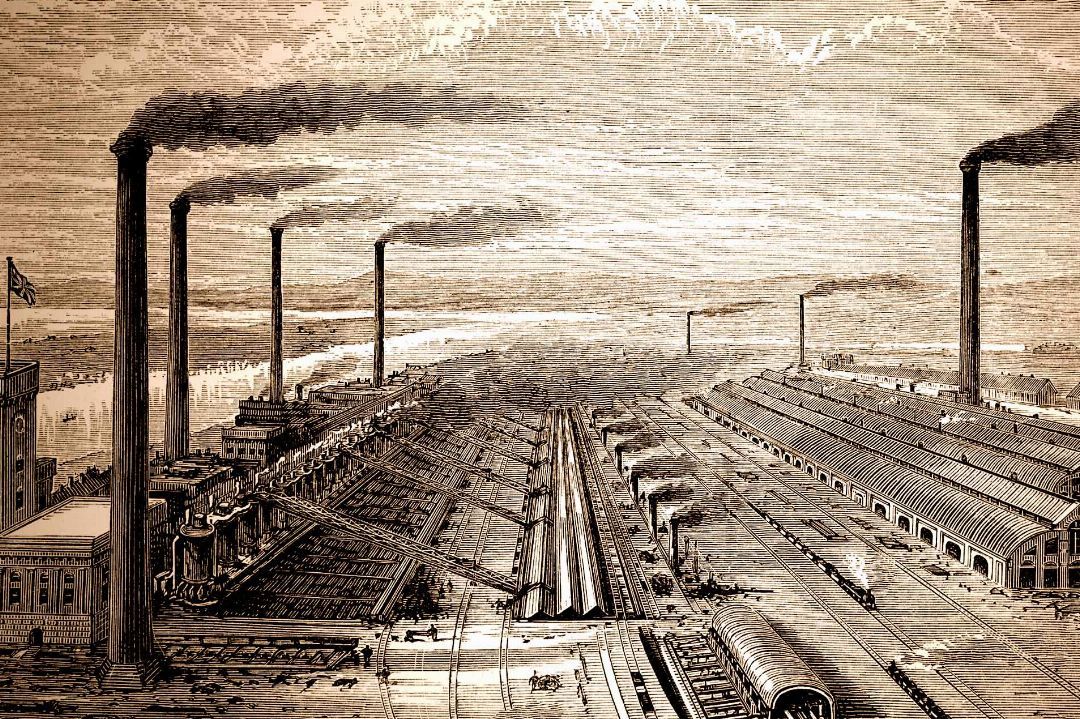
- Industrialization: Rapid industrial growth created vast economic inequalities, which social Darwinists justified as a natural result of competition.
- Imperialism: The expansion of empires was often rationalized through social Darwinist ideas, suggesting that more powerful nations were destined to dominate weaker ones.
- Racial Theories: Some proponents argued that certain races were inherently superior, which was used to justify discrimination and colonialism.
The application of these theories can be seen in various policies and societal attitudes. For instance, in the United States, social Darwinism was often invoked to oppose welfare policies and labor rights, with advocates arguing that such measures interfered with the natural order. This ideology played a significant role in the opposition to the Progressive Movement, which sought to address social inequalities.
Furthermore, social Darwinism influenced the eugenics movement, which aimed to improve the genetic quality of the human population. Prominent figures, like Francis Galton, applied these ideas, leading to policies that promoted selective breeding and forced sterilization in some countries during the early 20th century.
The origins of social Darwinism in the late 19th century were rooted in a complex interplay of scientific theories, social changes, and political ideologies. Its impact on society was profound, affecting everything from economic policies to views on race and human rights.
Key figures who shaped social Darwinist thought
Several prominent individuals played crucial roles in the development of social Darwinism during the late 19th century. Their interpretations of Darwinian concepts influenced various social and political ideologies.
- Herbert Spencer: Often regarded as the primary architect of social Darwinism, Spencer coined the phrase “survival of the fittest.” He applied Darwin’s theories to society and argued that social evolution resulted from competition and natural selection.
- William Graham Sumner: A sociologist and advocate of laissez-faire economics, Sumner believed that social classes arose naturally through competition. He famously stated, “The drunkard in the gutter is just where he ought to be,” reflecting his belief in individual responsibility and social inequality.
- Thomas Huxley: Known as “Darwin’s Bulldog,” Huxley was a prominent supporter of Darwin’s theories. While not a social Darwinist himself, his advocacy helped popularize Darwin’s ideas, which were later misappropriated to justify social hierarchies.
- Francis Galton: A cousin of Charles Darwin, Galton introduced the concept of eugenics, advocating for the improvement of human populations through selective breeding. His ideas contributed to the social Darwinist movement, promoting the belief that certain races were superior to others.
These figures had a lasting impact on societal views regarding race, class, and individualism. Their thoughts contributed to a broader acceptance of the belief that social progress occurred through competition and conflict.
For example, in the United States, social Darwinism influenced policies such as immigration restrictions and racial segregation. Many policymakers used these ideologies to justify oppressive laws, arguing that they were aligned with “natural” social orders.
The key figures of social Darwinism not only shaped its intellectual foundations but also affected real-world policies. Their legacy continues to spark debate about the implications of applying evolutionary theory to human societies.
How social Darwinism influenced political ideologies
Social Darwinism significantly impacted various political ideologies during the late 19th century, particularly in Western nations. Its core belief—that societies, like organisms, evolve through competition—provided a justification for imperialism, nationalism, and laissez-faire capitalism.
One of the most notable influences was on imperialism. Proponents argued that stronger nations had the right to dominate weaker ones, which they viewed as a natural order. This ideology fueled European powers’ expansion into Africa and Asia, leading to colonization and exploitation of resources.
- British Imperialism: The British Empire expanded dramatically during this period, driven by the belief in the superiority of British culture and race.
- American Expansion: The concept of Manifest Destiny, which justified the westward expansion of the United States, was also rooted in social Darwinist thought.
Social Darwinism also influenced nationalism, promoting the idea that nations must assert their strength to survive. In the United States, this resulted in a more aggressive foreign policy, while in Europe, it contributed to rivalries that eventually led to World War I. The belief that nations were in a constant struggle for survival fostered a climate of competition among them.
Moreover, social Darwinism shaped economic policies in capitalist societies. The idea that government intervention could disrupt the natural order led to minimal regulation of businesses. This perspective was evident in the United States during the Gilded Age, where industrialists thrived under laissez-faire principles, resulting in vast wealth disparities.
Examples of this can be seen in the rise of monopolies, such as Standard Oil, which dominated the oil industry by eliminating competition. The government’s reluctance to intervene allowed these monopolies to flourish, reinforcing social Darwinist beliefs about competition and survival of the fittest.
Social Darwinism profoundly influenced political ideologies by justifying imperialism, fostering nationalism, and promoting laissez-faire capitalism. These ideas not only shaped policies of the time but also left lasting legacies in modern political thought.
The role of social Darwinism in economic theory
Social Darwinism profoundly influenced economic thought in the late 19th century, intertwining with the principles of laissez-faire capitalism. This ideology suggested that just as in nature, only the “fittest” businesses would survive in the competitive market. The concept justified minimal government intervention in the economy, arguing that regulation would hinder natural economic selection.
Key economists, such as Herbert Spencer, promoted the idea that economic success was a reflection of inherent superiority. Spencer famously coined the phrase “survival of the fittest,” which became synonymous with social Darwinism. His works encouraged the belief that wealth and power were indicators of moral and social worth.
- Competition: Businesses should compete freely without government restraint.
- Wealth accumulation: Success was seen as a reward for hard work and intelligence.
- Social hierarchy: Economic status reflected one’s fitness in society.
One notable example of social Darwinism’s influence on economic policy was the United States during the Gilded Age. The government adopted a hands-off approach, allowing monopolies and trusts to flourish. Companies like Standard Oil and U.S. Steel exemplified the idea that economic dominance was a sign of natural superiority.
Moreover, the belief in social Darwinism led to the justification of harsh labor practices. Workers were often viewed as expendable, and their struggles were dismissed as a natural outcome of competition. The 1894 Pullman Strike, which highlighted the plight of laborers, was met with federal intervention, showcasing the government’s allegiance to capitalist interests over worker rights.
Social Darwinism shaped economic theory by promoting competition as a natural law and justifying economic disparities. This ideology not only influenced economic policies but also impacted social attitudes towards wealth, poverty, and labor rights during a transformative period in history.
Criticism and opposition to social Darwinism
Despite its popularity, social Darwinism faced significant criticism from various intellectuals and social reformers. Critics argued that it misapplied Darwin’s theories of natural selection and evolution to human society, oversimplifying complex social issues. They contended that using biology to justify social inequality was fundamentally flawed.
One major critique came from the field of sociology, where figures such as Emile Durkheim emphasized the importance of social structures over individual competition. Durkheim argued that social cohesion and collective responsibility were vital for societal progress, countering the notion that competition was the sole driver of human development.
- Ethical Concerns: Critics raised ethical questions regarding the implications of social Darwinism, particularly its justification of imperialism and colonialism. The belief that certain races were superior led to widespread discrimination and violence.
- Scientific Challenges: Many biologists, including Richard Lewontin, disputed the biological determinism inherent in social Darwinism. They argued that human behavior is influenced by a combination of genetics and environmental factors, not solely by a survival-of-the-fittest mentality.
- Humanitarian Movements: Organizations advocating for social justice, such as the Settlement Movement in the United States, emerged in opposition to social Darwinist ideologies. These movements promoted social welfare and addressed poverty rather than endorsing a survivalist approach.
An example of the backlash against social Darwinism can be seen in the response to the American Eugenics Movement in the early 20th century. While proponents of eugenics claimed to apply Darwinian principles, many scientists and activists opposed these views, highlighting their ethical implications and lack of scientific basis. By the 1930s, prominent figures in genetics began to reject eugenics, reaffirming the complexities of human heredity beyond simple Darwinian frameworks.
Additionally, the rise of socialism and other progressive movements during the late 19th and early 20th centuries offered alternative perspectives on societal organization. Socialists critiqued social Darwinism for promoting individualism at the expense of community welfare, advocating for collective rights and economic equality instead.
Impact of social Darwinism on social policies
Social Darwinism had a profound influence on social policies during the late 19th century, shaping attitudes towards poverty, welfare, and education. Proponents believed that social policies should reflect the principles of natural selection, often leading to policies that favored the wealthy and marginalized the poor.
One notable example is the implementation of poor laws in various Western nations. These laws were designed under the belief that aiding the poor would hinder societal progress. Instead, the focus shifted towards encouraging self-reliance, which often resulted in harsh treatment of the impoverished. For instance, in the United States, the Social Welfare Reform Act of 1890 aimed to reduce direct aid to the needy, emphasizing work over welfare.
- Education Policies: Education was often viewed through a Darwinian lens. The belief that intelligence was hereditary led to the implementation of eugenics movements, which sought to improve societal conditions by promoting the reproduction of individuals deemed “fit.”
- Public Health Initiatives: Social Darwinists argued that public health policies should focus on the “survival of the fittest.” This perspective influenced sanitation and health initiatives, often neglecting the needs of the underprivileged.
- Immigration Laws: Many countries adopted restrictive immigration policies based on the belief that certain races were superior. For example, the Chinese Exclusion Act of 1882 in the United States reflected these sentiments, aiming to preserve the Anglo-Saxon race.
Additionally, the rise of social policies related to labor rights was heavily influenced by Social Darwinism. Labor unions often faced opposition from both the government and business owners, who believed that allowing workers to organize would go against the natural order of competition. This ideology contributed to the violence that erupted during labor strikes, such as the Haymarket Affair of 1886, where police clashed with striking workers, resulting in deaths and further repression.
The impact of social Darwinism on social policies created a framework that prioritized competition and individualism at the expense of collective welfare. This resulted in policies that often exacerbated social inequalities, leaving vulnerable populations without adequate support.
Social Darwinism’s legacy in modern society
Social Darwinism has left a complex legacy that continues to influence contemporary social and economic ideologies. Despite its controversial roots, many principles associated with Social Darwinism can still be identified in modern thought.
- Meritocracy and Competition: The belief in a merit-based society where individuals succeed based on their abilities and efforts echoes Social Darwinist ideas. In education and the workplace, meritocracy is often championed as a means to reward talent and hard work.
- Social Welfare Policies: While Social Darwinism advocated for minimal state intervention, modern social policies have evolved. Governments today often implement welfare programs aimed at supporting those in need, contrasting with the original Social Darwinist views.
- Globalization and Economic Competition: The competitive nature of global markets reflects Social Darwinist concepts. Nations often engage in economic competition, with the belief that the most efficient economies will thrive, similar to the survival of the fittest.
Furthermore, various movements have emerged that draw on these ideas, albeit in transformed ways:
- Neoliberalism: This economic approach emphasizes free markets, deregulation, and competition, reminiscent of Social Darwinist principles. Since the late 20th century, neoliberal policies have often prioritized individual achievement over collective welfare.
- Environmental Darwinism: This contemporary interpretation applies Social Darwinism to ecological contexts, arguing that species and populations that adapt best to environmental changes will survive. This perspective influences debates on climate change and conservation.
In academia, Social Darwinism has also influenced fields such as sociology and anthropology, where debates about human behavior and societal structures continue. For instance, the concept of survival of the fittest is often referenced in discussions about social dynamics and cultural evolution.
Despite its contentious history, the ideas stemming from Social Darwinism remain pertinent in discussions about inequality, competition, and societal progress. As we navigate through the complexities of modern society, understanding this legacy helps frame current debates on human behavior and social policies.
Comparison between social Darwinism and biological Darwinism
Social Darwinism and biological Darwinism, although sharing a common name, diverge significantly in their principles and implications. Biological Darwinism, articulated by Charles Darwin, is grounded in the theory of evolution through natural selection. It posits that species evolve over time through a process of genetic variation and environmental adaptation. This scientific framework explains how certain traits become more prevalent within a population.
In contrast, social Darwinism misappropriates these evolutionary concepts to justify social inequality and imperialism. Advocates, such as Herbert Spencer, argued that societal progress occurs through the ‘survival of the fittest,’ suggesting that those who succeed economically or socially are inherently superior. This ideology often perpetuated harmful stereotypes and justified discriminatory practices.
- Biological Darwinism: Focuses on natural selection and adaptation in species.
- Social Darwinism: Applies evolutionary principles to justify social hierarchies and inequalities.
- Biological Darwinism is based on scientific evidence, while social Darwinism is rooted in ideology.
- Biological Darwinism promotes biodiversity, whereas social Darwinism can lead to social division.
For example, in the late 19th century, social Darwinists used their interpretation to support colonialism. They argued that imperial powers were naturally entitled to expand their empires, as they viewed themselves as more evolved than the populations they colonized. This perspective led to significant ethical and humanitarian issues, often resulting in exploitation and oppression.
Moreover, the legacy of social Darwinism can still be observed in contemporary discussions surrounding social policies. Concepts such as meritocracy and individualism echo the social Darwinist belief that success is solely a product of personal ability. This notion fails to account for systemic inequalities that exist within society.
While biological Darwinism provides a scientific foundation for understanding evolution, social Darwinism distorts these ideas to rationalize social inequities. The implications of these ideologies have shaped societal attitudes and policies, highlighting the importance of critically evaluating the application of scientific theories in social contexts.
Ethical implications of social Darwinist beliefs
The ethical implications of social Darwinist beliefs are deeply significant and often contentious. Advocates of social Darwinism posited that human societies evolved in a manner analogous to biological evolution, suggesting that those who were economically successful were inherently superior to those who were not. This notion led to the justification of social inequalities and a lack of support for marginalized groups.
One major ethical concern is the idea of survival of the fittest, which promoted a laissez-faire attitude toward social welfare. Proponents argued that intervention in the lives of the poor would disrupt natural selection. This belief often translated into policies that neglected the needs of vulnerable populations, reinforcing poverty rather than alleviating it.
- Justification of Inequality: Social Darwinism provided a framework to rationalize economic disparities as a natural order.
- Discouragement of Altruism: It undermined the moral obligation to help others, promoting individualism over community welfare.
- Racial Superiority: The ideology fueled racist theories, asserting that certain races were more evolved than others.
For example, in the United States during the late 19th century, the belief in social Darwinism influenced attitudes towards immigration. Many viewed immigrants as less fit for survival in the competitive economic landscape, leading to restrictive immigration policies and social stigmatization.
Another ethical implication can be observed in the realm of education. The emphasis on competition and individual achievement often marginalized students from disadvantaged backgrounds. Schools that adopted social Darwinist ideologies tended to focus on promoting the success of ‘gifted’ students while neglecting those who struggled, fostering an environment that dismissed the potential of all learners.
The ethical implications of social Darwinist beliefs extend far beyond individual perspectives, influencing societal structures and policies. Understanding these implications is critical for analyzing contemporary issues related to social justice and equality.
Frequently Asked Questions
What is the main difference between social Darwinism and biological Darwinism?
The main difference lies in their application. Biological Darwinism focuses on natural selection in nature, while social Darwinism applies these concepts to society, justifying inequalities among social classes and races based on perceived survival of the fittest.
How did social Darwinism impact social policies?
Social Darwinism significantly influenced social policies, promoting ideas such as eugenics and limited government intervention. This ideology justified harsh economic and social policies, often leading to discrimination and inequality in various communities.
What criticisms have been made against social Darwinism?
Critics argue that social Darwinism misapplies biological principles to justify social inequality and racism. It has been condemned for promoting harmful ideologies and neglecting the importance of social welfare and collective responsibility in society.
Is social Darwinism still relevant today?
While its direct influence has waned, elements of social Darwinist thinking can still be seen in contemporary debates around economic inequality and social policies. Understanding its historical context helps in addressing ongoing issues related to social justice.
What are the ethical concerns surrounding social Darwinism?
Ethical concerns include the justification of inequality, oppression, and discrimination based on a misinterpretation of Darwin’s theories. These implications challenge the morality of using such theories to dictate social policies and individual worth.
Conclusion
Social Darwinism’s legacy is marked by its enduring influence on modern social and economic ideologies, its stark differences from biological Darwinism, and the significant ethical implications that arise from its beliefs. Understanding these aspects is crucial for navigating contemporary societal challenges. By grasping the complexities of Social Darwinism, readers can critically analyze current social policies and ideologies. This understanding may lead to more informed decision-making and promote a more equitable society. Engage further with this topic by exploring additional resources or joining discussions that challenge prevailing ideologies. Embrace the opportunity to contribute to a more nuanced understanding of Social Darwinism’s impact today.