Have you ever wondered what drove millions to leave their homelands for America during the 19th century? The complex interplay of push and pull factors shaped this transformative era in immigration history, as people sought safety, opportunity, and a better life.
This article will explore the crucial push factors that compelled individuals to flee their countries, alongside the key pull factors that attracted them to the United States. Understanding these dynamics is essential for grasping the broader migration patterns and economic conditions that influenced European migration.
We will delve into topics such as the socio-economic challenges in Europe, the allure of American prosperity, and the historical context that facilitated this significant movement of people.
Understanding push factors in 19th century immigration
The 19th century witnessed a significant influx of immigrants to America, driven largely by various push factors in their home countries. These factors often created a sense of urgency for individuals and families, compelling them to seek a better life across the Atlantic.
One of the primary push factors was economic hardship. Many European countries faced severe economic instability, particularly during the 1840s. For instance, the Irish Potato Famine from 1845 to 1852 resulted in the death of approximately one million people and forced many to flee their homeland in search of food and employment opportunities.
- Poverty: Many immigrants came from regions with high poverty rates, where jobs were scarce.
- Political unrest: Revolutions and conflicts, such as the 1848 revolutions in Europe, led many to escape oppressive regimes.
- Religious persecution: Groups like the Jews from Eastern Europe faced discrimination, prompting them to seek refuge in the United States.
For example, during the mid-19th century, the rise of industrialization in Europe led to increased competition for jobs, resulting in widespread unemployment. Many German immigrants fled to America during this period, escaping not only economic despair but also political repression following the failed revolutions of 1848.
Additionally, the promise of land and opportunities in America acted as a powerful motivator. The Homestead Act of 1862, which offered 160 acres of land to settlers, attracted many who were desperate for a fresh start. This act exemplified how push factors were often intertwined with pull factors, creating a compelling case for migration.
The combination of these push factors—economic hardship, political instability, and social oppression—shaped the demographic landscape of the United States during the 19th century. Understanding these influences provides crucial insight into the motivations behind one of the largest migration movements in history.
Key pull factors attracting immigrants to America
The 19th century was characterized by numerous pull factors that drew immigrants to America. These factors made the prospect of moving to the United States appealing, often outweighing the struggles faced in their home countries.
- Economic Opportunities: A booming economy in the United States created a demand for labor. Immigrants were attracted by the promise of jobs, particularly in industries such as manufacturing, agriculture, and railroads. For instance, between 1860 and 1900, the U.S. workforce expanded significantly, offering numerous employment opportunities.
- Land Availability: The Homestead Act of 1862 facilitated access to land ownership. Immigrants could claim 160 acres of land for a minimal fee, encouraging many to settle in America. This act was particularly appealing to farmers from Europe seeking better agricultural prospects.
- Political and Religious Freedom: Many immigrants fled oppressive regimes or religious persecution. The United States was seen as a land of freedom and democracy. Groups such as the Irish and Germans sought refuge from political unrest and religious discrimination in their home countries.
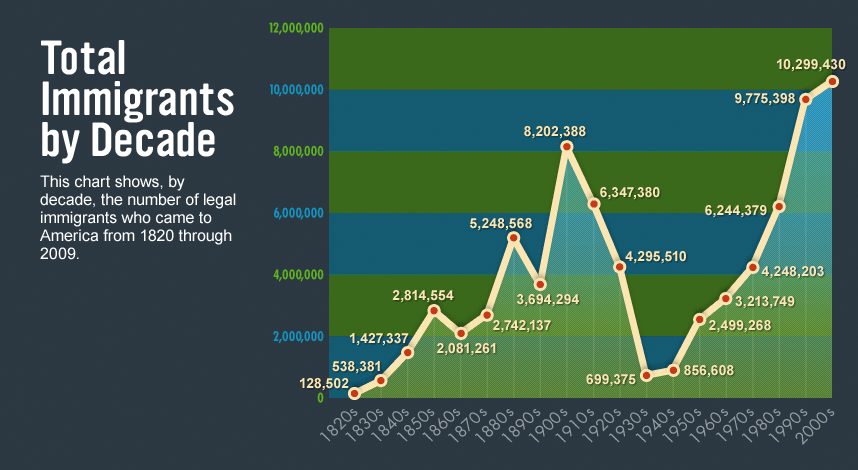
Additionally, the allure of the American Dream played a significant role. Many believed that hard work would lead to upward mobility and a better standard of living. For example, between 1820 and 1860, over 5 million immigrants arrived in the U.S., largely driven by the belief that America offered unparalleled opportunities.
Another notable factor was the availability of established immigrant communities. As new arrivals found support from family members and friends already in America, they were more inclined to make the journey. Cities like New York and Chicago became hubs for various immigrant groups, providing a sense of belonging and assistance in navigating their new lives.
- Educational Opportunities: The promise of education attracted families seeking better futures for their children. The establishment of public schools and universities in the U.S. provided an incentive for many immigrants to relocate.
- Infrastructure Development: The expansion of transportation networks, like railroads, made travel to America more accessible and affordable. This development was crucial in facilitating the movement of people and goods across the country.
Economic conditions driving European migration
The economic landscape of Europe during the 19th century was marked by profound challenges that significantly influenced migration patterns. Many European countries faced harsh economic conditions, including poverty, unemployment, and agricultural failures. These factors compelled individuals and families to seek better opportunities in America.
For instance, the Irish Potato Famine (1845-1852) devastated Ireland’s agricultural sector, leading to mass starvation and a desperate need for escape. Approximately one million Irish fled to the United States during this time, driven by the urgent need for food and sustenance.
- Industrial Revolution: The rise of factories in Britain and other parts of Europe led to urban overcrowding and poor working conditions.
- Unemployment: Many skilled laborers faced job losses as mechanization replaced traditional crafts, prompting them to emigrate.
- Land Scarcity: In countries like Germany and Italy, population growth outstripped available land, pushing many to seek land in America.
Economic instability was not confined to one region; it was a continent-wide phenomenon. In the 1830s, economic downturns in France and Belgium resulted in increased emigration rates. For example, the 1848 Revolutions across Europe caused widespread political and economic unrest, which saw thousands of Europeans seeking refuge and new beginnings in America.
Additionally, the promise of land ownership in the United States was a powerful draw. The Homestead Act of 1862 offered 160 acres of public land to settlers willing to farm it for five years. This act attracted many Europeans who dreamed of owning land and improving their economic status.
As a result, the economic conditions in Europe during the 19th century created a perfect storm for mass migration. The combination of famine, unemployment, and political unrest pushed millions across the Atlantic, forever altering the demographic landscape of America.
Political unrest and religious persecution as push forces
The 19th century was a period marked by significant political unrest and religious persecution in various parts of Europe. These conditions acted as powerful push factors, compelling many individuals and families to seek safety and stability in America. The consequences of political upheaval often included violent conflicts, oppressive regimes, and a lack of basic human rights.
For example, the 1848 revolutions across Europe led to widespread unrest. In places like France, Germany, and Italy, citizens rose against authoritarian governments, leading to significant bloodshed. Many who participated in or were affected by these uprisings faced severe repercussions, prompting them to emigrate.
- Germany: The 1848 revolutions resulted in over 200,000 Germans migrating to the United States, seeking freedom and democratic governance.
- Ireland: The Great Famine (1845-1852) exacerbated existing tensions, leading many Irish to flee not only for food but also from British rule.
- Italy: Political instability in the Italian states led to a wave of migration, with approximately 1.5 million Italians arriving in America by the end of the century.
Religious persecution also played a crucial role in driving immigrants to America. Groups such as the Jews fleeing pogroms in Eastern Europe and the Protestants escaping Catholic dominance in places like Ireland sought refuge in the United States. These groups faced discrimination and violence, which made emigration a necessary option for survival.
One notable example is the migration of Jews from Russia during the late 19th century. Following waves of pogroms, approximately 2 million Jews left for America between 1881 and 1924, significantly impacting the cultural landscape of American cities.
Political unrest and religious persecution were significant push factors that drove many Europeans to seek a new life in America during the 19th century. The search for political freedom and religious tolerance shaped not only the lives of the immigrants but also the future of the American society they joined.
The impact of industrialization on immigration patterns
The 19th century was a transformative era in America due to rapid industrialization. This shift significantly altered immigration patterns, as many immigrants sought opportunities in burgeoning cities. Industrial jobs were plentiful, attracting individuals from various backgrounds in search of improved economic prospects.
By the mid-1800s, cities such as New York, Chicago, and Philadelphia experienced explosive growth. For example, New York’s population skyrocketed from approximately 500,000 in 1850 to over 1.5 million by 1880. This urban influx was largely fueled by immigrants who were drawn to factory work and the promise of a stable income.
- Job Availability: The rise of factories created a demand for labor, leading to a significant influx of immigrants.
- Urbanization: As industries expanded, the need for housing and services in cities grew, attracting more immigrants.
- Transportation Advances: Improvements in transportation, such as steamships and railroads, facilitated easier travel for immigrants.
Many immigrants found work in textile mills, steel plants, and coal mines. For instance, the textile industry in Lowell, Massachusetts, became a significant employer of female immigrants. By the 1850s, Lowell Mills employed over 8,000 women, showcasing the gendered dimensions of industrial labor.
Moreover, industrialization also led to the establishment of ethnic enclaves. Immigrants often settled in neighborhoods where their language and culture were prevalent, helping them adapt to their new environment while maintaining their identities. For example, Little Italy and Chinatown in New York City became pivotal centers for Italian and Chinese immigrants, respectively.
Industrialization played a crucial role in shaping immigration patterns during the 19th century. The combination of job opportunities, urbanization, and advancements in transportation created a favorable environment for immigrants, ultimately contributing to the diverse cultural tapestry of America.
Role of transportation advancements in facilitating migration
The 19th century witnessed significant advancements in transportation that played a crucial role in facilitating immigration to America. Innovations such as steamships and railroads dramatically reduced travel time and costs, making it feasible for millions to embark on the journey.
Before the advent of steam-powered vessels, transatlantic crossings could take up to three months. However, with the introduction of steamships, the voyage was shortened to just a few weeks. For instance, the RMS Britannic, launched in 1874, drastically improved the speed and safety of travel, attracting many European migrants eager for new opportunities.
- Steamships: These vessels became the primary mode of transportation for immigrants across the Atlantic. Their reliability and speed were game-changers.
- Railroads: Once in America, the expansive railroad network facilitated movement inland, allowing newcomers to reach their final destinations.
- Immigrant processing facilities: Locations such as Ellis Island were strategically placed near major transport hubs, ensuring that newly arrived immigrants could quickly access rail services.
Moreover, the establishment of shipping lines, like the Cunard Line, created regular schedules for travel, which further encouraged migration. In the 1880s alone, over 3 million immigrants arrived in the United States, with many using these services.
As transportation technology advanced, so did the demographic makeup of immigrants. For example, the introduction of the Clipper Ship in the 1840s allowed faster travel for those fleeing famine in Ireland. These ships could carry hundreds of passengers, with many arriving in New York City seeking refuge and opportunity.
The impact of these advancements was profound. By the end of the century, the United States saw an influx of diverse populations, driven not only by economic and political factors but also by the newfound accessibility provided by modern transportation. This era laid the groundwork for America’s emergence as a nation of immigrants, shaping its cultural landscape for generations to come.
Social networks and immigrant communities in America
The establishment of social networks and immigrant communities was crucial for the adaptation and integration of newcomers in 19th-century America. These networks often provided essential support systems that facilitated the transition into a new environment. Immigrants relied heavily on these communities for economic opportunities, social connection, and cultural preservation.
Many immigrants settled in ethnic enclaves, where they could find familiar cultural practices and languages. Some of the most notable communities included:
- German Americans: By 1880, approximately 2 million German immigrants had settled in the United States, particularly in cities like Milwaukee and Cincinnati. Their communities established breweries, bakeries, and cultural societies.
- Irish Americans: Following the Great Famine of 1845-1852, over 1 million Irish immigrants arrived. They often settled in urban areas such as New York and Boston, forming mutual aid societies to assist newcomers.
- Italian Americans: Between 1880 and 1920, nearly 4 million Italians immigrated to America, with many forming vibrant communities in New York City and Chicago, contributing to the construction and labor sectors.
These immigrant communities were not just places of residence; they served as hubs of cultural identity. Festivals, religious practices, and communal gatherings helped maintain traditions and fostered a sense of belonging. For instance, the annual St. Patrick’s Day Parade in New York City, which started in 1762, became a significant event for Irish Americans, showcasing their cultural heritage.
Additionally, social networks often played a pivotal role in economic mobility. Immigrants utilized these connections to find jobs and secure housing. They shared information about employment opportunities, leading to the establishment of businesses within their communities. For example, many Jewish immigrants opened small shops and garment factories, which became integral to their economic survival and success.
The development of social networks and immigrant communities in 19th-century America was essential for facilitating adaptation and fostering cultural identity. These communities not only provided support but also contributed significantly to the social and economic fabric of the nation.
Government policies influencing 19th century immigration
In the 19th century, government policies significantly influenced immigration to America. These policies were often shaped by economic needs, political climates, and social attitudes towards immigrants. For instance, the Chinese Exclusion Act of 1882 marked a pivotal moment in U.S. immigration policy, as it was the first law to explicitly restrict immigration based on nationality. This act was a response to economic fears and widespread anti-Chinese sentiment among laborers.
Additionally, the Immigration Act of 1891 established federal control over immigration, creating the Bureau of Immigration. This act aimed to regulate the influx of immigrants, ensuring that health and moral standards were met. It also set the groundwork for future immigration laws.
- Chinese Exclusion Act (1882): Prohibited Chinese laborers from entering the U.S.
- Immigration Act of 1891: Established federal oversight and health regulations for immigrants.
- Contract Labor Law (1885): Banned the importation of foreign workers under contract.
- Ellis Island as an Immigration Station (1892): Opened to process millions of immigrants.
These policies not only controlled who could enter the country but also reflected the prevailing attitudes towards different ethnic groups. For example, while immigrants from Northern and Western Europe were often welcomed, those from Southern and Eastern Europe faced more scrutiny. This bias can be seen in the Quota Acts of the 1920s, which favored immigrants from certain countries over others.
Throughout the century, the U.S. government used restrictive measures to control immigration flows. The Contract Labor Law of 1885 aimed to prevent the importation of foreign workers under labor contracts, as American workers feared job competition. As a result, many immigrants were forced to navigate a complex immigration landscape that often included quotas, inspections, and deportations.
Government policies in the 19th century shaped not only the demographics of immigrants coming to the United States but also the social and economic framework within which these individuals had to adapt. The legacy of these laws continues to influence immigration debates today.
Consequences of immigration on American society and economy
The influx of immigrants during the 19th century had profound effects on American society and its economy. These consequences can be categorized into several key areas: labor supply, cultural diversity, and social challenges.
Firstly, immigrants significantly increased the labor supply in the United States. By the mid-1800s, cities like New York and Chicago became bustling hubs due to the arrival of millions of Europeans. For instance, between 1820 and 1860, over 4 million immigrants settled in the U.S., providing vital labor for the growing industries such as textiles, steel, and railroads.
- Labor Demand: Industrial growth required vast numbers of workers.
- Economic Contributions: Immigrants contributed to the economy by working in factories and building infrastructure.
- Job Competition: Native-born workers often viewed immigrants as competition for jobs.
Secondly, immigration led to a rich tapestry of cultural diversity. The arrival of groups from Ireland, Germany, Italy, and Eastern Europe introduced new traditions, languages, and cuisines. For example, the Irish brought St. Patrick’s Day celebrations, while Italians popularized pizza and pasta, profoundly influencing American culture.
Moreover, immigrant communities formed enclaves, creating neighborhoods that celebrated their heritage. These areas became critical for social support, helping newcomers adjust to their new lives. By the end of the century, cities like New York had distinct ethnic neighborhoods such as Little Italy and Chinatown.
However, the rapid influx of immigrants also led to social challenges. Many native-born Americans expressed concerns about job security and cultural dilution. This tension culminated in movements such as the Know-Nothing Party, which aimed to limit immigration and promote nativist policies. For instance, in 1854, the party gained significant traction, advocating for the exclusion of immigrants from political participation.
The consequences of 19th-century immigration were multifaceted. While it bolstered the workforce and enriched American culture, it also sparked significant social tensions that shaped the nation’s response to immigration for decades to come.
Frequently Asked Questions
What were the main push factors for immigration to America in the 19th century?
The primary push factors included economic hardship, political instability, and religious persecution in the immigrants’ home countries. Many individuals sought better opportunities and safety, which led to a significant influx of people seeking a new life in America.
How did social networks help immigrants adapt in 19th-century America?
Social networks provided critical support for immigrants, facilitating their adaptation to American life. These networks included family connections, community organizations, and cultural associations, which helped newcomers find jobs, housing, and services, easing their transition into society.
What government policies affected immigration during the 19th century?
Government policies, such as the Chinese Exclusion Act and various immigration laws, significantly influenced who could enter the country. These policies were often reactive to economic needs and public sentiment, impacting the flow of immigrants seeking a better life in the United States.
What were the economic consequences of 19th-century immigration?
The influx of immigrants had notable economic consequences, including labor supply increases, industrial growth, and urbanization. Immigrants filled essential roles in factories and infrastructure, contributing to the rapid expansion of the American economy during this period.
Where can I find more information about immigrant communities in 19th-century America?
For additional details on immigrant communities, consider exploring historical archives, academic journals, or books focused on American immigration history. Local libraries and online databases can also provide rich resources for understanding the experiences of these communities.
Conclusion
The exploration of social networks and immigrant communities, the impact of government policies, and the significant consequences of immigration on American society and economy reveals the complex dynamics of 19th-century immigration. These factors collectively shaped the fabric of modern America. By understanding these push and pull factors, readers can appreciate the historical context that influences current immigration debates and policies. This knowledge can foster a more informed perspective on contemporary issues related to immigration. To deepen your understanding of this topic, consider researching more about the lasting effects of 19th-century immigration on today’s society. Engage with local communities and discussions to broaden your insights.